At 193 pounds, Roy Jones Jr. stepped into the ring against John Ruiz with a heavyweight title at stake. Ruiz outweighed him by 33 pounds. Twelve rounds later, on March 1, 2003, Jones had won a clear decision and added a heavyweight championship to the titles he had already held at middleweight, super middleweight and light heavyweight.
It was a remarkable climb for a boxer whose greatest advantage had never been size. Jones made opponents miss by inches, struck from positions most trainers would discourage and often seemed to have finished an exchange before the other man had started.
Getting there began in a very different setting: a demanding boxing upbringing in Pensacola, Florida.
Pensacola, a demanding father and an Olympic silver
Born Roy Levesta Jones Jr. on January 16, 1969, he learned boxing under his father, Roy Jones Sr., a former professional fighter and Vietnam veteran. In interviews, Jones has described that upbringing as harsh and his father’s training methods as frightening. Their working relationship helped shape his early career, although the two later separated professionally.
The amateur results came quickly. He won a National Junior Olympic championship at 119 pounds in 1984, then National Golden Gloves titles at 139 pounds in 1986 and 156 pounds in 1987. His commonly cited amateur record is 121-13.
At the 1988 Seoul Olympics, he reached the light-middleweight final against South Korea’s Park Si-hun. Jones controlled the fight, with punch statistics showing him landing 86 blows to Park’s 32. The judges nevertheless awarded Park a 3-2 decision.
The verdict became one of Olympic boxing’s most disputed results and contributed to pressure for changes in scoring. Jones received the Val Barker Trophy as the tournament’s outstanding boxer, but the official result remained a silver medal.
Hopkins and Toney: two titles, two different tests
His professional debut took place in Pensacola on May 6, 1989, when he stopped Ricky Randall in the second round. Four years later, he was fighting for a vacant world championship.
On May 22, 1993, Jones outpointed Bernard Hopkins over 12 rounds to win the IBF middleweight title. Neither man had yet become the established figure he would later be, but the bout introduced a championship rivalry that would stretch across decades.
The next major step came against James Toney on November 18, 1994. Toney arrived as the IBF super-middleweight champion and one of boxing’s most respected fighters. Jones knocked him down in the third round and won a wide unanimous decision.
Against an opponent celebrated for his timing and defensive craft, Jones had imposed his own rhythm. Sudden attacks, quick changes of distance and explosive combinations made him difficult to anticipate, let alone contain.
A disqualification, then a first-round answer
Jones carried a 34-0 record into his first meeting with Montell Griffin on March 21, 1997. By then, he held the WBC light-heavyweight championship.
Griffin presented genuine problems before the fight ended controversially in the ninth round. With Griffin down on one knee, Jones struck him twice and was disqualified. His first professional defeat was also the loss of his title.
The rematch lasted less than a round. On August 7, 1997, Jones dropped Griffin early, then finished him with a leaping left hook to reclaim the belt.
He went on to consolidate the division. A fourth-round body-shot knockout of Virgil Hill in April 1998 demonstrated that his power had travelled upward with him. He took the WBA title from Lou Del Valle that July, then beat Reggie Johnson in June 1999 to add the IBF championship and become the undisputed light-heavyweight champion.
Not every challenger could make him work at full stretch. Against Glen Kelly in February 2002, Jones briefly held both hands behind his back before landing the punches that ended the fight. He stopped Clinton Woods later that year.
The Boxing Writers Association of America named him its Fighter of the Decade for the 1990s. His next move took him beyond the division he had come to control.
The heavyweight gamble
Against Ruiz in Las Vegas, Jones did not try to become a conventional heavyweight. He used movement, fast combinations and sharp counters to prevent the larger champion from establishing a sustained physical fight.
The unanimous decision made him the first former middleweight world champion to win a heavyweight championship since Bob Fitzsimmons in 1897.
There was an important distinction: Jones won the WBA heavyweight belt, not the division’s undisputed championship. Even with that qualification, the achievement was unusual enough without embellishment. He had now held world titles in four weight classes.
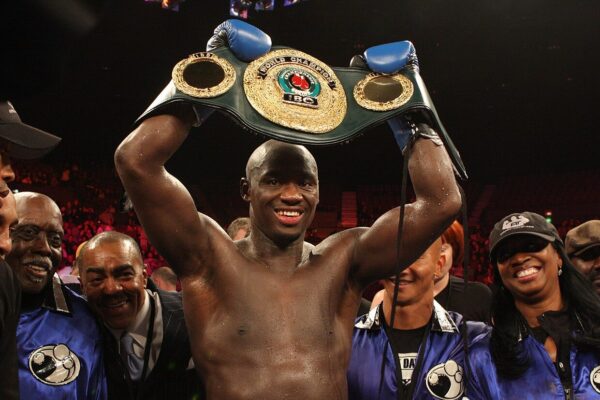
Rather than remain at heavyweight, he returned to 175 pounds. On November 8, 2003, he won a difficult majority decision over Antonio Tarver.
He had secured another major victory, but the effortless-looking dominance of earlier years was disappearing.
Tarver, Johnson and a long second act
The Tarver rematch changed the direction of his career. On May 15, 2004, a left hand caught Jones in the second round, and Tarver won by stoppage.
Four months later, Glen Johnson knocked him out in the ninth. Jones then lost a third meeting with Tarver by unanimous decision in October 2005.
These were not isolated setbacks against obscure opponents. They were three consecutive defeats at championship level, two of them damaging knockouts, after years in which he had rarely looked vulnerable.
He nevertheless continued fighting. Later victories included decisions over Felix Trinidad in 2008 and Jeff Lacy in 2009, while defeats to Danny Green, Hopkins in their 2010 rematch and Denis Lebedev showed how far he had moved from his peak.
In November 2020, he shared an exhibition with Mike Tyson. Its unofficial judging produced a draw, but the event did not count toward either man’s professional record.
Jones entered the International Boxing Hall of Fame in 2022. On April 1, 2023, he returned to a sanctioned professional contest against former UFC champion Anthony Pettis, losing a majority decision. That result left his record at 66 wins, 10 losses and no draws, with 47 knockouts.
Speed, timing and calculated risks
Calling Jones unconventional only tells part of the story. His low hands and sudden lead hooks worked because he judged distance exceptionally well and could react before opponents completed their attacks.
He often invited a punch, pulled just beyond its reach and answered before the other boxer recovered. At his best, he could lead or counter with equal authority.
Those habits also carried risks. As his reactions slowed, positions he once escaped became dangerous. The later knockouts did not erase his earlier ability; they exposed how much his approach depended on physical gifts that could not remain unchanged indefinitely.
Basketball, music and life beyond the ropes
Few champions have prepared for a title defence by playing another professional sport that afternoon. On June 15, 1996, Jones appeared for the Jacksonville Barracudas in a basketball game, then stopped Eric Lucas in the 11th round of their boxing match that evening.
Music offered another outlet. He released the rap album Round One: The Album in 2001 and later recorded with Body Head Bangerz. His track “Can’t Be Touched” became familiar far beyond his own ring entrances.
Acting appearances included The Devil’s Advocate, The Matrix Reloaded and Southpaw. He also developed substantial careers as a television analyst and trainer, explaining the mechanics of a sport in which his own methods had often resisted textbook instruction.
Public profiles identify his wife as Natlyn Jones and his children as Roy III, DeShaun and DeAndre. In June 2024, he publicly announced DeAndre’s death and asked for privacy for the family.
His international activities brought political controversy, too. In September 2015, he received Russian citizenship after meeting Vladimir Putin, while retaining his American citizenship. Ukrainian authorities subsequently barred him from entering Ukraine following his visit to Russian-occupied Crimea.
The basketball appearances, recording sessions and political headlines made his public life unusually wide-ranging. His sporting record remains more specific: four championship divisions, a defining run at light heavyweight and a heavyweight victory achieved without surrendering the speed that had brought him there.
FAQ
What is Roy Jones Jr.’s professional boxing record?
After his April 1, 2023 defeat to Anthony Pettis, his professional record stood at 66-10, with 47 knockouts.
How many weight divisions did he win world titles in?
Four: middleweight, super middleweight, light heavyweight and heavyweight.
Why was his Olympic defeat controversial?
He lost the 1988 light-middleweight final to Park Si-hun by a 3-2 decision despite clearly outlanding him. Jones received the tournament’s Val Barker Trophy.
Did he fight Mike Tyson?
Yes. They met in a November 2020 exhibition, which did not affect their professional records.
Is he in the Boxing Hall of Fame?
Yes. He was inducted into the International Boxing Hall of Fame in 2022.
Does he have Russian citizenship?
Yes. The Florida-born boxer received Russian citizenship in September 2015 while retaining his American citizenship.
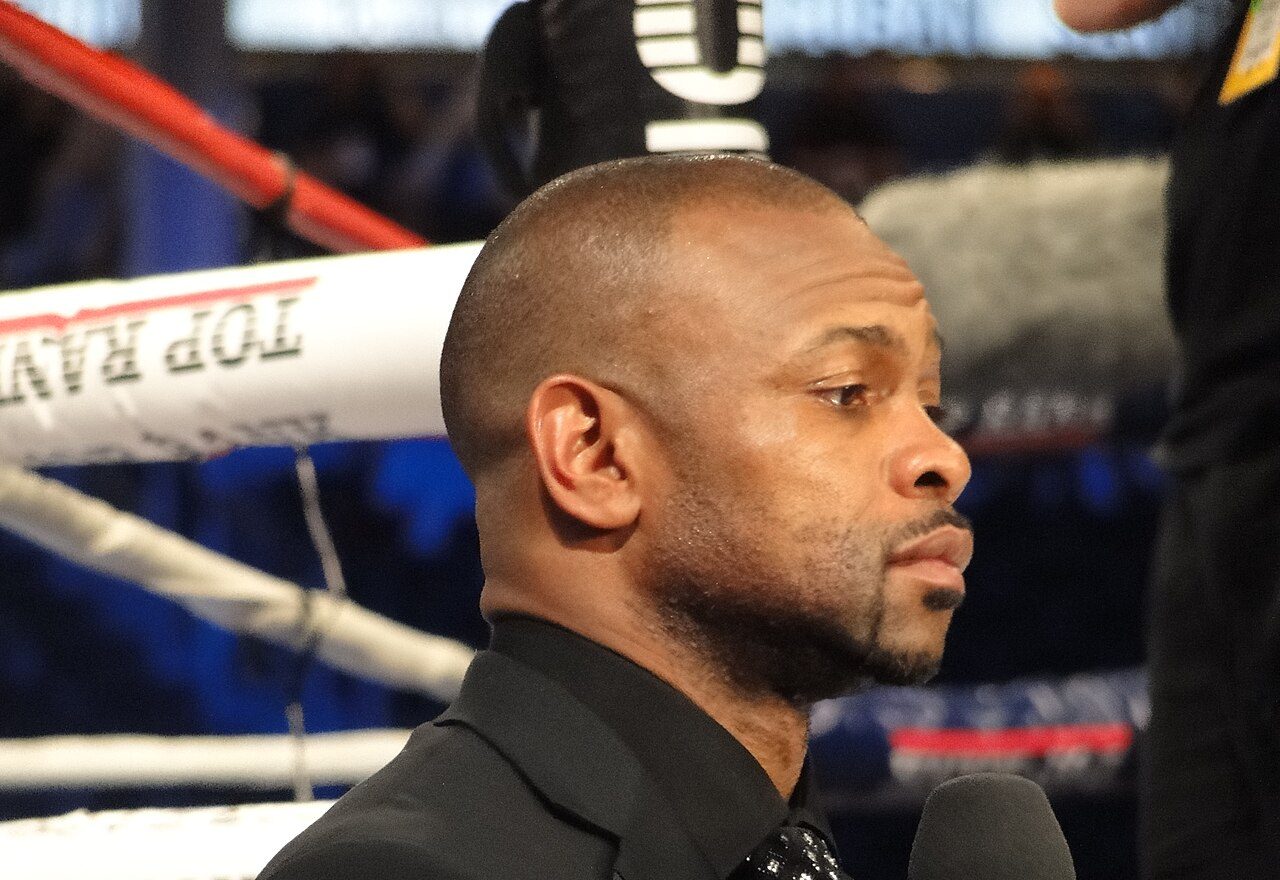
Photo: Bryan Horowitz, CC BY-SA 2.0, via Wikimedia Commons