A split decision in Toronto changed more than one career. When Dricus du Plessis edged Sean Strickland at UFC 297, he did not just win the UFC middleweight belt, he became the first South African to hold a UFC championship.
That moment fit the arc of his career. Du Plessis had already won titles in EFC and KSW, built a reputation as a finisher, and done it while keeping his base in South Africa rather than relocating full-time to a major American camp. Known as “Stillknocks,” he has long been an unusual figure in modern MMA: a top-level contender shaped at home, then tested abroad, then crowned on the sport’s biggest stage.
Early years in Welkom
Dricus du Plessis was born on January 14, 1994, in Welkom, in South Africa’s Free State. Sport came early. He started judo as a child, later added wrestling, and then moved into kickboxing in his teens. That layered background still shows in the cage. He does not fight like a pure striker or a pure grappler; he fights like someone who learned to blend phases from the start.
He also played rugby during his school years, which helps explain some of the physicality in his style. Outside sport, he briefly studied agricultural economics at the University of Pretoria. He speaks both Afrikaans and English.
Family has been part of the story too. His parents have been identified in published profiles as Japie and Gerda du Plessis, and his brother Niel has also competed in combat sports.
Team CIT and the base that never moved
Pretoria became the center of his fighting life. Du Plessis developed at Team CIT and later became closely tied to the gym’s growth, with multiple reports describing him as a co-owner. He trains under coach Morne Visser at the CIT Performance Institute.
That matters because it sets him apart from many champions. While plenty of elite fighters travel constantly or relocate to the United States, du Plessis built his rise while remaining rooted in Africa. It became a point of identity as much as a training choice.
Amateur success before MMA took over
Before he was known for title fights in major promotions, he had already put together a serious kickboxing résumé. Du Plessis is widely reported to have gone 33-0 as an amateur kickboxer, with 30 knockouts. The standout result came in 2012, when he won gold at the WAKO Junior World Championships in K-1 at 86 kilograms.
He also had a short amateur MMA run before turning professional. By then, the outline of the fighter was already visible: heavy hands, a willingness to press forward, and enough grappling to punish opponents who focused only on the striking.
EFC: the first belts
His professional MMA debut came on July 25, 2013, in EFC Africa. The early years were fast and violent. Du Plessis quickly became known as a finisher, stringing together stoppages and rising through the South African scene with the kind of momentum that tends to force matchmakers’ hands.
There was an early setback. In 2014, Garreth McLellan submitted him with a guillotine choke at EFC 33. It remains one of the formative losses on his record, not because it derailed him, but because it arrived before the bigger breakthrough and showed that his climb would not be perfectly smooth.
He recovered well. In EFC, he won titles at both welterweight and middleweight, becoming a two-division champion. That stretch established two themes that would follow him for years: he could carry power across weight classes, and he was far more than a one-dimensional puncher.
KSW and a bigger stage
The next major step came in Poland with KSW, one of Europe’s strongest MMA promotions. In October 2018, du Plessis stopped Roberto Soldić in the second round at KSW 45 to win the KSW welterweight title. It was one of the best wins of his pre-UFC career.
He later lost the rematch to Soldić in 2019, a reminder that his game was still developing against high-level opposition. But by the time he left KSW, his stock was clear. He had won belts in EFC and KSW, had fought outside South Africa successfully, and had built a record full of finishes.
UFC debut and the quick climb
The UFC signed him in 2020. His debut came on October 10, 2020, against Markus Perez at UFC Fight Night: Moraes vs. Sandhagen. Du Plessis won by first-round knockout, an immediate introduction to the division.
From there, the middleweight run gathered pace. He beat Trevin Giles in 2021, then stopped Markus Perez, Brad Tavares and Darren Till in a sequence that showed different parts of his game. The Till fight at UFC 282 in December 2022 was especially useful for his reputation. Du Plessis did not just outslug him; he found a third-round submission, a neck crank, after a hard fight.
Then came the performance that changed his place in the division. At UFC 290 in July 2023, he stopped former champion Robert Whittaker in the second round. That result carried real weight. Whittaker had long been the standard for anyone trying to break into the title picture at middleweight, and du Plessis beat him convincingly.
Winning the UFC middleweight championship
The title shot arrived at UFC 297 on January 20, 2024. Across five rounds with Sean Strickland, du Plessis pushed the pace, mixed his attacks, and did enough to take a split decision. It was close, messy in places, and exactly the kind of fight champions often have to survive before they can call themselves champions.
With that win, Dricus du Plessis became UFC middleweight champion and the first South African UFC champion.
Reported purse figures for UFC events vary by outlet and are often incomplete unless they come from official athletic commission disclosures. Some published estimates placed his UFC 297 earnings at around $632,000, but those numbers should be treated as estimates rather than confirmed totals.
Defending the belt
His first title defense came against Israel Adesanya at UFC 305 in August 2024. Du Plessis won by submission in the fourth round, securing a rear-naked choke. It was one of the most important wins of his career, both because of Adesanya’s standing in the division and because it underlined the breadth of du Plessis’s game. By then, nobody could credibly frame him as only a pressure striker.
He followed that with a rematch against Sean Strickland at UFC 312 in February 2025, winning a unanimous decision over five rounds. That gave him a second successful defense and strengthened his hold on the division.
As with many top UFC fighters, payout figures attached to those bouts have been widely circulated online. They remain reported estimates unless backed by official disclosures.
Record, style and what makes him difficult
Du Plessis has competed at both welterweight and middleweight, but his biggest achievements came at 185 pounds. He is listed at 6-foot-1 with a 76-inch reach and fights from a switch stance.
The style is awkward in a useful way. He pressures opponents, throws with real force, and is willing to look a little unorthodox if it gets him where he wants to go. His kickboxing background is obvious, but so is the influence of judo and wrestling. He can hurt opponents on the feet, force scrambles, and finish on the mat.
That is reflected in his record. At 24-3, he has won far more often by stoppage than by decision, with victories by both knockout and submission. Early in his professional career, all of his first 15 wins came inside the distance, which remains one of the clearest snapshots of the way he fights.
Life outside the cage
Away from competition, Pretoria remains central to his life. Du Plessis has repeatedly spoken about staying in South Africa and helping the sport grow there, rather than treating his home base as a temporary stop on the way to somewhere else.
His connection to Team CIT is part of that. The gym where he developed is also, according to multiple published reports, a business interest. That gives his career a neat symmetry: prospect, champion, then investor in the same environment that shaped him.
He has also been linked to endorsement and business work outside fighting. Public reports have connected him with brands including Monster Energy, Mercedes-Benz South Africa, USN and others. Claims about exact net worth or total career earnings should be treated carefully, since those figures are usually estimates compiled by media outlets rather than confirmed financial disclosures.
A few personal details have circulated publicly. Du Plessis has spoken about dealing with breathing issues and undergoing surgery to correct them. A post-fight kiss with coach Morne Visser drew attention online, but that was more viral moment than serious controversy.
As for rumor, it should stay labeled as rumor. Online chatter has claimed that he trained with a former coach from Khamzat Chimaev’s circle before a potential matchup, but that appears to rest on social media and forum speculation rather than solid reporting. It should not be presented as established fact.
Why his rise stands out
Plenty of fighters reach the UFC with strong regional records. Fewer arrive having already won belts in multiple promotions, and fewer still go on to become a UFC champion while keeping their camp rooted at home. That is a large part of why du Plessis matters in MMA history.
From Welkom to EFC, from KSW to the UFC middleweight title, his story has moved in a clear line: local prospect, international contender, world champion.
FAQ
Where is Dricus du Plessis from?
He was born in Welkom, in South Africa’s Free State.
What is Dricus du Plessis’s nickname?
He fights under the nickname “Stillknocks.”
Has Dricus du Plessis won a UFC title?
Yes. He won the UFC middleweight championship by defeating Sean Strickland at UFC 297 on January 20, 2024.
Who is Dricus du Plessis’s coach?
His longtime head coach is Morne Visser.
Where does Dricus du Plessis train?
He trains in Pretoria, South Africa, at the CIT Performance Institute with Team CIT.
What is Dricus du Plessis’s fighting style?
He is a pressure-heavy, well-rounded MMA fighter with a kickboxing base, real knockout power, and proven submission ability.
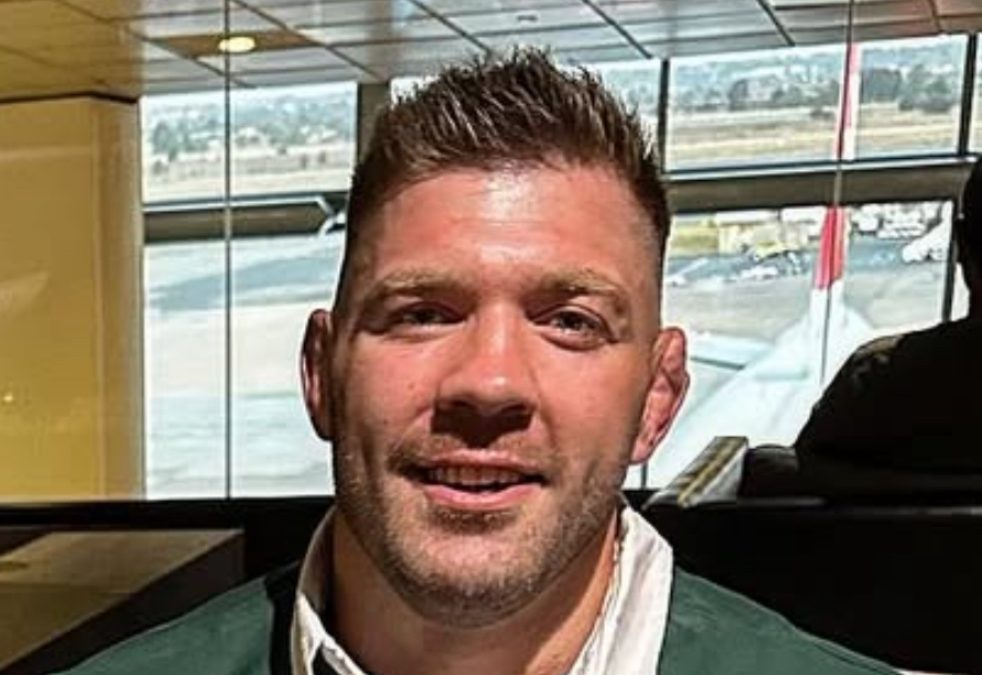
Photo: User:Philippe3017, CC0, via Wikimedia Commons