A karate class meant to teach discipline ended up shaping one of the most durable careers in modern MMA. Robert Whittaker, born in Otahuhu, Auckland, on December 20, 1990, moved to Australia as a child and grew into a fighter who crossed weight classes, won a UFC title, and stayed near the top long after many of his contemporaries had faded.
He is best known as Robert Whittaker, though fans have long used the nicknames The Reaper and Bobby Knuckles. At his peak, he became the first Australian fighter to win a UFC championship and the first New Zealand-born UFC titleholder. Those are the headline facts. The fuller story is steadier and more interesting: a talented athlete built on structure, family, and years of adaptation.
Early life: discipline first
Whittaker was born in New Zealand and raised largely in Australia, where his father enrolled him and his brother in Goju-ryu karate when he was seven. The reason was simple: discipline. That origin point matters because it still shows in the way he has carried himself as a professional-measured in interviews, economical in his fighting style, and rarely interested in unnecessary noise.
He progressed quickly in martial arts, earning a junior black belt in karate while still young. Over time he added Hapkido and Brazilian jiu-jitsu, building a base that was broader than the usual striker label suggests. He also competed in wrestling, which helped round out a game that would later let him deal with pressure fighters, kickboxers, and elite grapplers alike.
After his parents separated, he was raised by his father, a figure Whittaker has often spoken about with respect. One of his familiar pre-fight rituals-tapping the Southern Cross tattoo on his chest-has been described as a tribute to him. Family, in public at least, has always sat close to the center of Whittaker’s story.
Learning the trade on the regional circuit
Before the UFC, there was the usual hard apprenticeship: local shows, small venues, and the slow work of building a record. Whittaker made his professional debut in 2009 and fought on the Australian regional scene, including appearances for Xtreme Fighting Championships and Cage Fighting Championships.
Those years mattered. He was not rushed into the spotlight as a finished product. He learned how to manage rounds, how to fight through awkward moments, and how to win without everything going cleanly. He also picked up the Superfight Australia welterweight title during that phase, an early sign that he was moving beyond prospect status.
The bigger break came in 2012 on The Ultimate Fighter: The Smashes, the Australia vs. UK edition of the show. Whittaker won the welterweight tournament, beating Brad Scott in the final, and that victory earned him a UFC contract. It was not yet the version of Whittaker most fans would remember, but it was the point where his career changed scale.
A difficult UFC start at welterweight
His official UFC debut came in December 2012, when he beat Brad Scott by unanimous decision. It was a solid start, not a spectacular one, but it confirmed he belonged at the level.
The welterweight run that followed was mixed. Whittaker beat Colton Smith and then lost a split decision to Court McGee in a close fight that could easily have gone the other way. He later suffered a first-round stoppage loss to Stephen Thompson, whose speed and range exposed some of the problems Whittaker had at 170 pounds.
That period now looks important for a different reason: it showed that welterweight was not his best division. The cut was hard, and his performances at the weight did not always reflect the athlete he really was. In 2014, he moved up to middleweight. It turned out to be the defining decision of his career.
Middleweight changed everything
The difference was visible almost immediately. In his middleweight debut in November 2014, Whittaker stopped Clint Hester by TKO. He looked stronger, fresher, and far more natural. The division fit him.
From there, the wins began to stack up. He beat Brad Tavares, Uriah Hall, and Rafael Natal, then stopped Derek Brunson in one of the performances that pushed him firmly into contender territory. By the time he met Ronaldo “Jacaré” Souza in 2017, he was no longer an interesting mover-up from welterweight. He was one of the best middleweights in the world.
Whittaker beat Jacaré by second-round TKO in April 2017, a major result against a longtime elite contender. That set up an interim title fight with Yoel Romero in July.
The Romero fights and a place in history
Whittaker’s first fight with Romero remains one of the key nights of his career. After a difficult opening, he adjusted, settled into his rhythm, and won a unanimous decision to claim the interim UFC middleweight title.
That victory carried historic weight. It made him the first Australian UFC champion and the first New Zealand-born fighter to win a UFC title. Later that year, when Georges St-Pierre vacated the undisputed middleweight belt, Whittaker was elevated from interim champion to undisputed champion.
His first scheduled defense, against Luke Rockhold at UFC 221, never happened because of injury. Whittaker withdrew with medical issues that included a severe staph infection and other complications, and Romero instead fought Rockhold for an interim belt. That chapter was messy, but the title lineage remained intact.
When Whittaker finally returned to face Romero again in June 2018, the rematch delivered one of the toughest fights of his career. He won a split decision after five punishing rounds. Because Romero missed weight, Whittaker’s title was not on the line for his opponent, but the result still stands as one of the clearest examples of his resilience at championship level.
Losing the belt, then rebuilding
Championship reigns are often remembered for the moment they end. For Whittaker, that came in October 2019 against Israel Adesanya. In front of a huge crowd in Melbourne, Adesanya knocked him out in the second round and took the middleweight title.
It was a sharp setback, but not the end of Whittaker as an elite fighter. What followed may have been one of the more impressive stretches of his career in a different way. He rebuilt without theatrics, beating Darren Till, Jared Cannonier, and Kelvin Gastelum to work his way back into title contention.
That earned him a rematch with Adesanya in February 2022. This time the fight was closer, more tactical, and more competitive, but Whittaker lost by unanimous decision. He had improved his approach, yet Adesanya remained a difficult puzzle for him.
Even after that second title defeat, Whittaker stayed in the top tier of the division. He beat Marvin Vettori in 2023, then lost a decision to Dricus du Plessis in a title eliminator later that year. Those results kept him in the familiar role he had occupied for years: too good for almost everyone, still chasing another shot at the belt.
Later career turns
Whittaker opened another chapter by stopping Paulo Costa in February 2024, then knocking out Ikram Aliskerov in June. Both wins reinforced that he remained a dangerous and technically sharp middleweight even deep into his UFC run.
Later that year, he faced Khamzat Chimaev and lost by submission. Reports after the bout said Whittaker suffered a serious jaw injury during the finish, a reminder of how brutal the sport can be even for its most seasoned professionals.
Any claims about later fights, divisional changes, rankings, or a move to light heavyweight should be treated carefully unless confirmed by the UFC’s official records. The supplied timeline included future-dated results and rankings that cannot be presented as established fact here. Based on his verified UFC body of work, Whittaker is most accurately described as a former UFC middleweight champion and longtime contender who also competed at welterweight earlier in his career.
How Robert Whittaker fights
At a glance, Whittaker looks like a striker. That is true, but incomplete. His game is built on quick entries, sharp exits, feints, and a strong sense of timing. The karate background is visible in his stance changes, darting attacks, and ability to hit while moving in and out of range.
He has also long been one of the better anti-wrestling middleweights in the sport. His takedown defense, scrambling ability, and balance let him stay upright against dangerous grapplers, while his own wrestling gave him another layer when needed. Add in Brazilian jiu-jitsu and years of high-level experience, and the result is a fighter who has rarely been easy to control for long.
Whittaker is at his best when he can draw reactions, counter cleanly, and build momentum with combinations rather than single shots. He is not a reckless pressure fighter. He is more precise than that, and usually more patient.
Life outside the cage
Away from fighting, Whittaker has generally kept a private image, though a few details are well established. He is married to Sofia Whittaker, and they have a large family. Public interviews and social media posts over the years have made clear that fatherhood is central to his life, though exact counts and names of children should be handled with care unless directly confirmed by the family.
One widely reported and documented personal episode came in 2019, when Whittaker donated bone marrow to help his daughter. It was the kind of story that revealed something essential about him without turning him into a symbol. His public persona has never depended on noise; it has usually rested on steadiness.
Outside MMA, he has also shown his interest in gaming and pop culture, including work on the MMArcade Podcast. That side of him fits the broader picture: a top-level fighter who has often seemed more grounded than theatrical.
In the gym, Whittaker has long been associated with PMA Super Martial Arts in Australia, working with coaches including Henry Perez and Justin Fitzgerald. Those stable coaching ties helped shape the consistency of his style over the years.
As for purse figures and sponsorship income, those numbers are often estimated by media outlets rather than fully disclosed. Reported earnings for some major fights have circulated in publications such as Sportskeeda, but unless the UFC, athletic commissions, or Whittaker himself confirm them, they are best treated as reported estimates rather than hard fact.
FAQ
Who is Robert Whittaker?
Robert Whittaker is a New Zealand-born Australian mixed martial artist and former UFC middleweight champion.
What is Robert Whittaker’s nickname?
He is widely known as The Reaper, and fans also call him Bobby Knuckles.
Was Robert Whittaker a UFC champion?
Yes. He won the interim UFC middleweight title in 2017 and was later promoted to undisputed champion.
Did Robert Whittaker fight at welterweight?
Yes. He began his UFC career at welterweight before moving up to middleweight in 2014.
Is Robert Whittaker Australian or New Zealander?
He was born in New Zealand and raised in Australia, and he is commonly identified as a New Zealand-born Australian fighter.
What is Robert Whittaker’s fighting style?
His style blends karate-based striking, strong takedown defense, wrestling, and Brazilian jiu-jitsu.
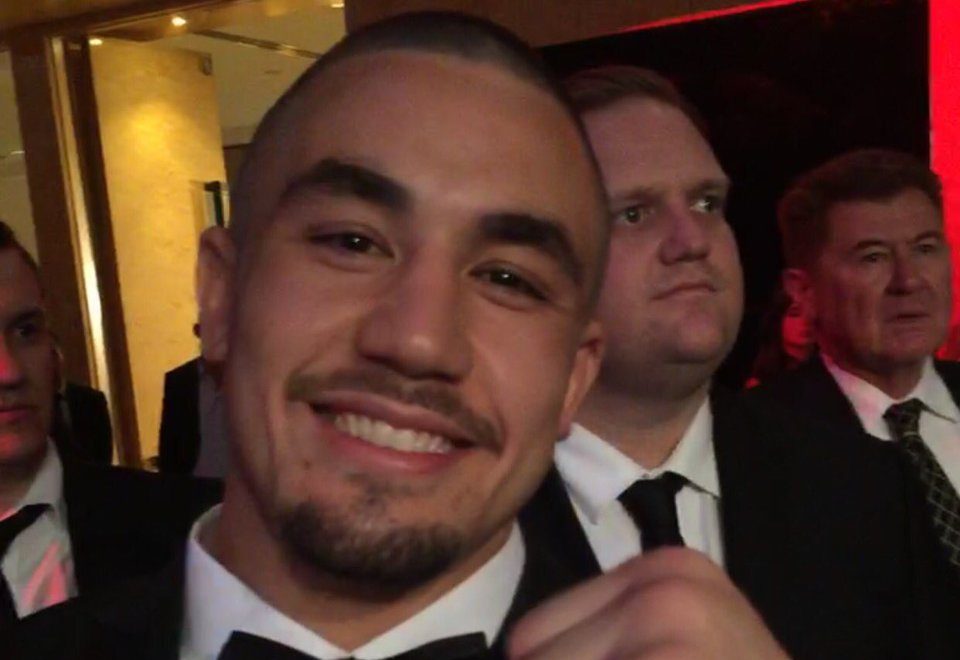
Photo: Realistkilla, CC0, via Wikimedia Commons