Two dates frame the arc of Saúl “Canelo” Álvarez’s career. The first is his professional debut in 2005, when he was still 15. The second is November 2021, when he stopped Caleb Plant and became boxing’s first undisputed super middleweight champion in the four-belt era. Everything in between helps explain how a red-haired teenager from Jalisco turned into one of the sport’s most bankable and most studied fighters.
From San Agustín to the gym in Guadalajara
He was born Santos Saúl Álvarez Barragán on July 18, 1990, in San Agustín, Jalisco, Mexico, the youngest in a large family. Boxing was already in the house. Several of his brothers became professionals, including Rigoberto Álvarez, who later held an interim world title. Their parents, Ana María Barragán and Santos Álvarez, raised the family in modest circumstances, and Álvarez has often spoken about a childhood that included helping with the family’s paleta business and spending time around horses.
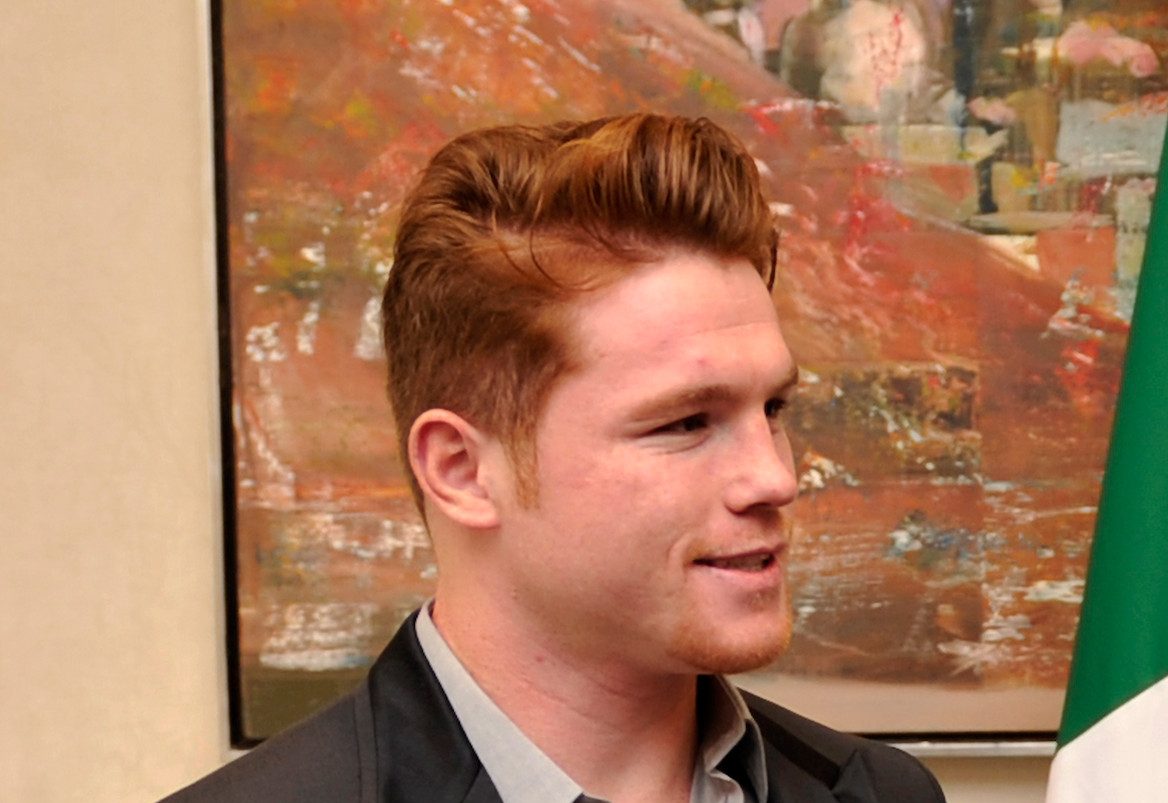
The nickname came early. “Canelo,” Spanish for cinnamon, was a reference to his red hair and freckles, features that made him stand out in a country where that look is uncommon. In boxing circles he was also called “Canelito,” a softer variation used by trainer José “Chepo” Reynoso, the man who would become one of the central figures in his development.
Álvarez took up boxing around age 13 after watching Rigoberto train. He began working at the Julián Magdaleno gym in Guadalajara, and the amateur results came quickly. His reported amateur record was 44-2 with 12 knockouts. He won silver at the Mexican junior nationals in 2004 and took the junior national title in 2005. It was enough to convince his team that waiting around made little sense.
A professional before he could legally drink
On October 29, 2005, Álvarez made his pro debut and stopped Abraham González in the fourth round. He was 15, too young to fit the usual prospect timeline, and that shaped the early years of his career. While many future champions were still collecting amateur rounds, he was already learning the rhythms of eight- and ten-round fights.
The first phase of his run was busy and practical. He fought often, mostly in Mexico, and built experience at welterweight and light welterweight. By the end of that stretch he had become a reliable attraction, not just because he was winning, but because his style was already recognizable. He did not waste much. He slipped shots with small movements, stayed balanced, and punished mistakes with compact counters, especially to the body.
That method helped him move to 42-0-1 before his first loss. It also created the version of Álvarez that would follow him through five weight classes: patient, physically strong, hard to hit clean, and dangerous when opponents overcommitted.
The first world title and the Mayweather lesson
His first major title arrived on March 5, 2011, when he beat Matthew Hatton by unanimous decision to win the vacant WBC light middleweight title. He was only 20, and the belt made official what had been building for a while: he was no longer just a promising young Mexican fighter. He was now part of boxing’s main conversation.
Title defenses against Ryan Rhodes, Alfonso Gómez and Kermit Cintrón kept the momentum going. In April 2013 he added the WBA and Ring magazine titles at 154 pounds with a decision win over Austin Trout, a polished southpaw who had just beaten Miguel Cotto. That victory mattered. It showed Álvarez could handle a high-level boxer without needing a knockout to make his point.
Then came Floyd Mayweather Jr. on September 14, 2013. Álvarez entered as the younger, naturally bigger man; he left with the first loss of his career, a majority decision defeat in a fight that exposed how much there still was to learn at the elite level. Mayweather controlled distance, tempo and angles, and Álvarez spent long stretches trying to solve a puzzle he could not quite reach.
The loss did not stall him for long. If anything, it sharpened the next stage.
Rebuilding, moving up, and the Golovkin rivalry
After beating Alfredo Angulo and Erislandy Lara in 2014, Álvarez moved more firmly toward middleweight. On November 21, 2015, he defeated Miguel Cotto by unanimous decision to win the WBC and Ring middleweight titles. Cotto was the bigger name, but Álvarez was the fresher fighter and the harder puncher. It was one of the wins that anchored his pay-per-view standing.
He followed with a sixth-round knockout of Amir Khan in May 2016, then dropped back to 154 pounds and stopped Liam Smith in September to win the WBO light middleweight title. By then, though, the fight hanging over the division was obvious: Gennady Golovkin.
Their first meeting, on September 16, 2017, ended in a split draw, one of the most disputed scorecards of the era. Golovkin’s pressure and jab won him many supporters that night; Álvarez’s sharper counters and body work won him others. The rematch was delayed after Álvarez tested positive for clenbuterol in February 2018. He said the result came from contaminated meat in Mexico, and the Nevada State Athletic Commission suspended him for six months.
When they finally met again on September 15, 2018, Álvarez fought with more initiative and won a majority decision, taking the WBA (Super), WBC and Ring middleweight titles. The trilogy bout came much later, in September 2022, and Álvarez won that one by unanimous decision. By then the rivalry had lost some of its urgency, but the three fights still define a major part of his middleweight legacy.
DAZN, a lawsuit, and a title at 175
The business side of his career became almost as closely watched as the fights. In 2018, Álvarez signed a massive deal with DAZN, widely reported as an 11-fight agreement worth $365 million. The relationship did not last. In 2020, amid disputes involving DAZN and Golden Boy Promotions, he filed a lawsuit seeking damages reported at at least $280 million. The case was eventually resolved, and he became a promotional free agent.
Inside the ropes, he kept collecting titles. In May 2019 he beat Daniel Jacobs to add the IBF middleweight belt to his collection. Later that year he moved up again and stopped Sergey Kovalev in the 11th round to win the WBO light heavyweight title. Kovalev was past his peak, but the result still underlined the unusual breadth of Álvarez’s résumé. Few elite fighters have won major titles from light middleweight to light heavyweight.
The super middleweight sprint
His most efficient and historically important run came at 168 pounds. On December 19, 2020, he outboxed Callum Smith to win the WBA (Super), Ring and vacant WBC super middleweight titles. Smith was taller, longer and unbeaten; Álvarez spent the night walking him down, taking away his jab and hammering his left arm and body.
Five months later, on May 8, 2021, he beat Billy Joe Saunders when Saunders’ corner stopped the fight after eight rounds. That added the WBO belt. The atmosphere at AT&T Stadium was one of the signature live scenes of his career, with more than 73,000 fans in attendance.
The final piece came on November 6, 2021. Álvarez dropped Caleb Plant twice in the 11th round and stopped him to win the IBF title, becoming the first undisputed super middleweight champion of the four-belt era. It was not a long reign in calendar terms, but it was a clean, fast sweep through the division.
Defeat at light heavyweight, then back to familiar ground
He tried to repeat the trick at 175 pounds in May 2022 and ran into Dmitry Bivol, who beat him by unanimous decision. Bivol’s jab, footwork and punch volume kept Álvarez from setting the pace he prefers. It was a clear loss, and one that reminded everyone that moving up has limits, even for a fighter as adaptable as he is.
After the third Golovkin fight, Álvarez defended his super middleweight titles against John Ryder in May 2023 and Jaime Munguía in May 2024. He then faced Edgar Berlanga in September 2024 and won by unanimous decision, scoring a knockdown along the way.
One point in the original timeline needed correcting: Terence Crawford did not beat Álvarez in September 2025, and Álvarez did not lose his undisputed status that way. That fight did not take place. Likewise, any claim that he was scheduled to face Christian Mbilli in 2026 goes beyond established fact and should not be stated as settled.
His professional record is also often misstated when later rumors or fictional future results get mixed in. The verified record does not support the 64-4-2 mark listed in the draft.
How Canelo Álvarez fights
The easiest label is counter-puncher, but that only covers part of it. Canelo Álvarez is at his best when he can make an opponent lead, read the shot, and answer with something shorter and heavier. His defense relies on upper-body movement, subtle slips and a high guard rather than constant foot speed. He is also one of the best body punchers of his era, especially with the left hook under the elbow and the right hand to the ribs.
At his peak, his control of distance was as important as his power. He could back opponents to the ropes without smothering his own work, and he rarely looked rushed. Even in fights he lost, that composure remained part of his identity.
Another notable detail: he has never been knocked down as a professional.
Life outside the ring
Away from boxing, Álvarez has kept close ties to Guadalajara and to the ranch life he has long enjoyed. Horses, cars and family are recurring themes in his public image and interviews. He has children from previous relationships, but details about his private life should be handled carefully unless he has confirmed them publicly. Reports about partners, homes or family arrangements that are not directly confirmed are better treated as private or described only as reported by established outlets.
Business has become a serious second track. He has launched branded ventures, including a ready-to-drink cocktail line and merchandise operations, and he has been linked in published reports to investments in areas such as convenience retail and food service in Mexico. Some of those holdings are described differently across sources, so it is better not to present every claimed venture as definitively verified without company records or direct confirmation.
He has also crossed into entertainment, appearing briefly in Creed III. Reported charitable work has included support for children’s causes and hospital-related initiatives in Mexico.
Commercially, he has been one of boxing’s biggest earners for years. Forbes has repeatedly listed him among the world’s highest-paid athletes, and his endorsement history has included both Mexican and international brands. Exact net-worth figures, however, are estimates rather than hard facts and are best treated that way.
FAQ
What is Canelo Alvarez’s real name?
His full name is Santos Saúl Álvarez Barragán.
Where is Canelo Alvarez from?
He was born in San Agustín, Jalisco, Mexico.
How did Canelo Alvarez get his nickname?
“Canelo” refers to his cinnamon-colored red hair.
What weight classes has Canelo Alvarez fought in?
He has won major titles from light middleweight to light heavyweight and has competed across several divisions, including middleweight and super middleweight.
Has Canelo Alvarez ever been knocked out?
No. He has never been knocked out, and he has not been knocked down as a professional.
What is Canelo Alvarez known for as a fighter?
He is known for counter-punching, body work, defensive head movement and strong ring positioning.
Photo: Presidencia de la República Mexicana, CC BY 2.0, via Wikimedia Commons