Forty-two fights, forty-two wins, and not a single official knockdown against him. That is the clean outline of Terence Allan Crawford’s professional career, but it only hints at how unusual his run was. The Omaha native, known throughout boxing as “Bud,” won world titles from lightweight to light middleweight, became undisputed champion in two divisions, and built his reputation on something harder to measure than numbers alone: control.
By the time Terence Crawford retired, his record stood at 42-0 with 31 knockouts. He had spent years doing what elite fighters are supposed to find difficult-adjusting on the fly, changing stance, and making high-level opponents look as if they had been drawn into the wrong kind of fight.
Omaha roots and an early start in boxing
Crawford was born on September 28, 1987, in Omaha, Nebraska. Boxing was already close at hand. His father, grandfather and uncle all boxed at the amateur level, and Crawford began training as a child at the C.W. Boxing Club under coach Midge Minor.
The sport gave him structure early, and it also sharpened the traits that would define him later. Even as a young boxer, he was known for patience, timing and the ability to read what was happening in front of him rather than forcing exchanges that were not there.
His amateur record is commonly listed as 58-12. He did not make an Olympic team, but he put together a strong national-level résumé. Among his better results were gold medals at the 2006 Blue & Gold National Championships and the U.S. National PAL Championships. He also took silver at the Golden Gloves and earned medals at U.S. national tournaments in the years that followed.
Those results mattered, but they did not make him a household name. Crawford entered the professional ranks more as a respected prospect than a heavily marketed star.
Turning pro and breaking through at lightweight
He made his pro debut on March 14, 2008, stopping Brian Cummings. The early years were steady rather than flashy. Crawford built rounds, learned the pace of the professional game, and kept winning.
His first major breakthrough came on March 1, 2014, when he traveled to Scotland and beat Ricky Burns by unanimous decision to win the WBO lightweight title. It was an important moment in more ways than one. Crawford did not just win a belt; he did it on the road, against a defending champion, and in a setting that demanded composure.
A few months later, he produced one of the standout wins of his lightweight run by stopping Yuriorkis Gamboa in June 2014. Gamboa’s speed and amateur pedigree made him a serious test. Crawford solved him gradually, then took over. That pattern-study first, punish later-would become a familiar one.
He defended his title successfully and left the division having established himself as one of the best technicians in the sport. Around that time, he also picked up The Ring championship at lightweight.
The move to junior welterweight and undisputed status
The next chapter came at 140 pounds, where Crawford’s game seemed to broaden. He was no longer just a sharp boxer with timing. He was becoming a complete problem: a switch-hitter who could box orthodox or southpaw, control distance, and change the rhythm of a fight almost without warning.
On July 23, 2016, he faced Viktor Postol in a unification bout and won a clear unanimous decision. Postol entered unbeaten and with a reputation for discipline and size, but Crawford handled him with authority. He scored knockdowns and controlled the terms of the fight.
Reports at the time put the event at around 50,000 to 60,000 pay-per-view buys on HBO, and his purse has been widely reported at about $1.3 million. Those business numbers never defined Crawford’s standing the way his performances did, but they were part of the broader picture of a fighter who was still earning respect faster than mainstream fame.
The defining night at junior welterweight arrived on August 19, 2017. Crawford stopped Julius Indongo in the third round to unify the WBA, WBC, IBF and WBO titles and become the undisputed champion at 140 pounds. He was the first male boxer of the four-belt era to become undisputed in that division.
The finish was clinical and sudden, ending with a body shot that folded Indongo. It was the kind of ending Crawford specialized in: not reckless, not rushed, just exact. His reported purse for that bout was around $1.5 million.
By the end of his time at junior welterweight, he had done more than collect belts. He had shown that his style traveled cleanly across divisions.
Welterweight and the Errol Spence Jr. fight
Crawford moved up again and won another title on June 9, 2018, stopping Jeff Horn to claim the WBO welterweight belt. Horn was rough, physical and awkward, but Crawford settled the fight by breaking him down and forcing a stoppage.
The title defenses that followed included wins over Jose Benavidez Jr., Amir Khan, Kell Brook and Shawn Porter. The Porter fight, in particular, carried weight because Porter had long been one of the division’s toughest and most reliable tests. Crawford stopped him in the 10th round on November 20, 2021, handing Porter the only stoppage loss of his career.
Reported purses for that stretch varied by source, but figures commonly cited include about $3 million for Horn, roughly $3.625 million for Benavidez, around $5.5 million for Khan, about $4 million for Brook, and around $6 million for Porter. The Porter event was also widely reported at roughly 135,000 ESPN+ PPV buys.
Still, one fight hovered over the division the entire time: Crawford against Errol Spence Jr.
When it finally happened on July 29, 2023, the bout was for the undisputed welterweight championship. Crawford dominated it. He dropped Spence, controlled him with the jab and straight left hand, and forced a stoppage in the ninth round. In a matchup that had been framed as a close meeting of elite champions, he made the gap look wide.
That victory made him the undisputed champion at welterweight and the first male boxer in the four-belt era to become undisputed in two divisions. It was also one of the clearest examples of his ring intelligence. He found the timing early, disrupted Spence’s rhythm, and never let the fight settle into the kind of pressure battle many expected.
Commercial reports around the event varied, but it was widely reported as a major Showtime PPV success, with estimates around 700,000 buys and roughly $25 million in earnings for Crawford including pay-per-view upside.
A title at light middleweight
After clearing out welterweight, Crawford moved to 154 pounds. On August 3, 2024, he beat Israil Madrimov by unanimous decision to win the WBA light middleweight title.
The fight was different from some of his more dramatic stoppage wins. Madrimov asked technical questions and made Crawford work for answers. Crawford still found enough of them to win on the cards and add a world title in a fourth weight class.
His reported purse for that bout was around $2.5 million, though, as with many boxing pay figures, exact totals depend on the source.
Style, habits and what made him difficult
Some fighters impose themselves with volume. Others do it with size or speed. Crawford’s best quality was that he could take away what an opponent did best and then build the fight around that discovery.
He is naturally left-handed but comfortable switching stance, and he often used that flexibility to create confusion rather than just variety. He could lead, counter, step back, walk a man down, or spend rounds gathering information before increasing the pressure. His timing was sharp, his punch selection was economical, and his defense was often built on anticipation as much as movement.
That is why his record carries a particular kind of weight. He retired 42-0 with 31 knockouts, was never officially knocked down as a professional, and rarely gave away clear rounds once he had established the pace. The numbers support the eye test, but they do not replace it. Crawford was difficult because he kept changing the problem.
Life outside the ring
For all the travel and title fights, Crawford remained closely tied to Omaha. That local connection has always been central to his story. He trained there, lived there for much of his career, and invested there.
He is widely reported to be in a long-term relationship with Alindra Person, and she has been identified in multiple profiles as the mother of his children. Crawford is also widely described as a father of seven, though fighters’ family details are not always presented consistently across sources.
Away from boxing, he has been linked to several business interests, including merchandise, real estate and other ventures in Nebraska. Some reports have claimed he owned dozens of houses and multiple apartment complexes, but those figures are difficult to verify independently, so they are best treated as reported estimates rather than settled fact.
His charitable work is better documented. In 2013, he helped launch B&B Sports Academy, a nonprofit boxing gym for young people in Omaha. He has also been involved in community work locally and has been connected in published profiles to charitable efforts abroad, including trips to East Africa with former teacher Jamie Nollette.
One of the most repeated stories from his personal life is also one of the starkest: Crawford has said he survived a gunshot wound to the head in 2008. The incident has been referenced in multiple interviews and profiles and forms part of the harder edge that has long surrounded his public image.
The 2016 legal case
One off-ring matter did become public during his career. In 2016, Crawford was charged in Omaha in a case involving property damage and disorderly conduct after a dispute at an auto body shop. Published reports stated that he later received a suspended jail sentence and probation. Because summaries of the case often vary in detail, the safest approach is to stick to the documented basics: the charges were filed, and the case resulted in a reported sentence that included suspended jail time and probation.
Terence Crawford’s place in boxing
Crawford’s career did not depend on noise. It was built on wins, adjustments and range-across styles, across divisions, and across different stages of his life in the sport.
He came out of Omaha with a strong amateur background, won his first world title at lightweight, became undisputed at junior welterweight and welterweight, and finished with one of the cleanest records of his era. For long stretches, he was the fighter opponents could not quite solve until it was too late.
FAQ
Is Terence Crawford retired?
Yes. He retired after completing a 42-0 professional career.
What is Terence Crawford’s boxing record?
His final professional record was 42-0 with 31 knockouts.
What is Terence Crawford’s nickname?
He is widely known as “Bud.”
Where is Terence Crawford from?
He is from Omaha, Nebraska, in the United States.
How many weight classes did Terence Crawford win world titles in?
He won recognized world titles in four weight classes: lightweight, junior welterweight, welterweight and light middleweight.
Was Terence Crawford an undisputed champion?
Yes. He became undisputed champion at junior welterweight and welterweight.
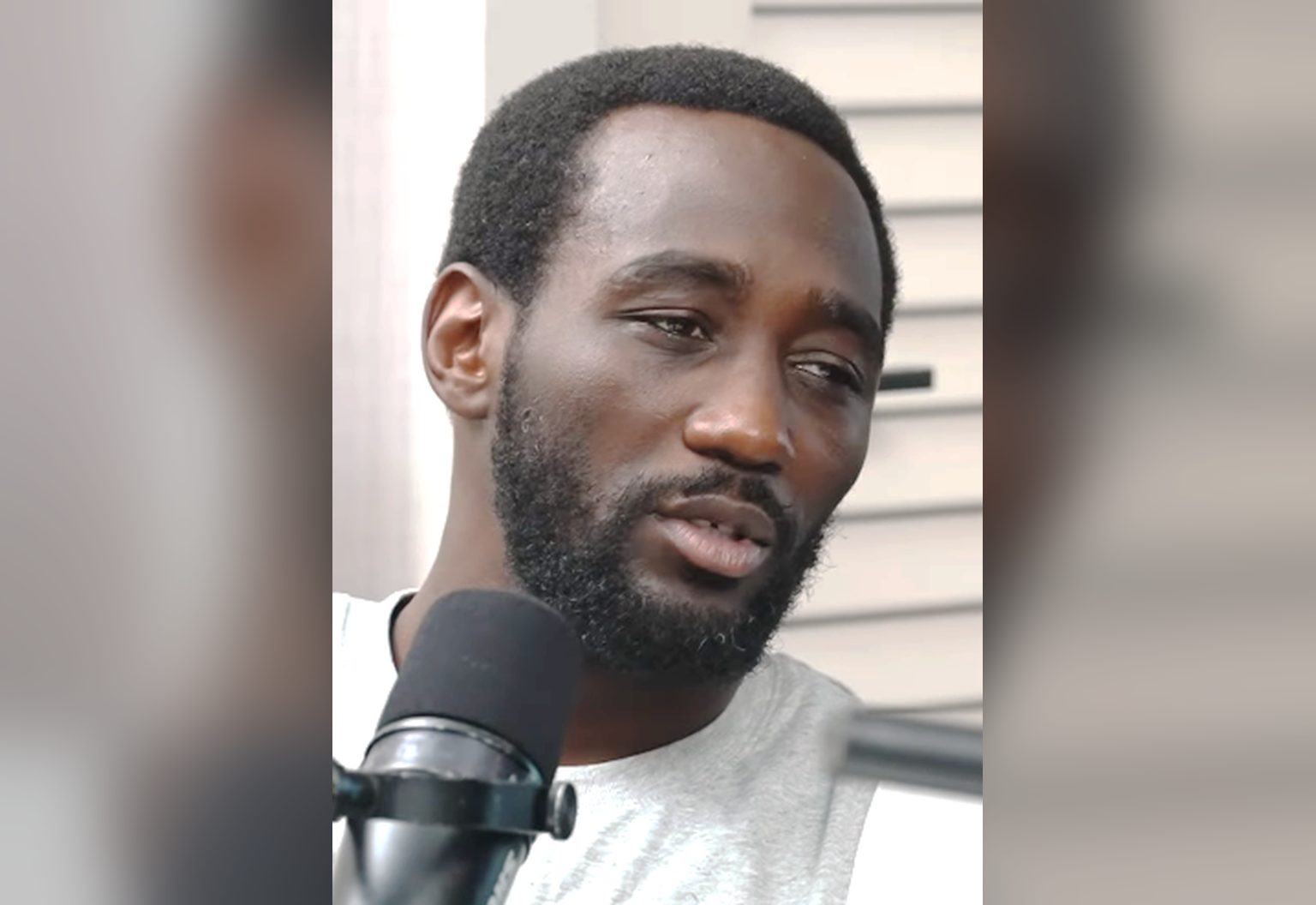
Photo: MILLION DOLLAZ WORTH OF GAME, CC BY 3.0, via Wikimedia Commons