When Naoya Inoue blasted out Omar Narváez in two rounds in Tokyo, he did more than win a second world title. He announced that his power had followed him up another division, and that the fast-track matchmaking around him was not reckless after all. By then, the Japanese boxer from Zama, Kanagawa, was already moving at a pace few elite prospects ever try.
That urgency has defined his professional story. Inoue won world titles in four weight classes, became undisputed champion at bantamweight and super bantamweight, and built an unbeaten record while spending much of his career in title fights. Nicknamed “The Monster,” he is known for the obvious part first, the knockouts, but the fuller picture is a fighter whose timing, balance and punch selection have been just as important as raw force.
Growing up in Zama and learning under his father
Naoya Inoue was born on April 10, 1993, in Zama, in Japan’s Kanagawa Prefecture. Boxing entered early. His father, Shingo Inoue, had boxed as an amateur and became the central figure in his son’s development, first as a guide and later as his trainer. Before the gym became the center of everything, Inoue also played soccer as a small child, but boxing quickly took over.
That father-son bond remained one of the constants of his career. Inoue developed in a disciplined home setup and later trained out of Ohashi Boxing Gym, with Shingo still deeply involved in the work. The arrangement helped shape the style he would become known for: compact, efficient, calm, and rarely out of position.
As an amateur, he reportedly compiled a 75-6 record with 48 stoppages, a strong run that included domestic and international success. He won the Japanese Interscholastic Athletic Meeting in 2009 and 2011, and the Japanese Junior National Championships in 2009. Abroad, he took bronze at the 2010 Asian Youth Championships in Tehran and won gold at the President’s Cup in Jakarta in 2011.
The losses mattered too. He was beaten by Yosvany Veitía at the 2010 AIBA Youth World Championships and again at the 2011 World Amateur Boxing Championships, then lost to Birzhan Zhakypov in the 2012 Asian Olympic qualifier. One result that gained extra meaning later was his amateur knockout win over Kenshiro Teraji, another future world champion from Japan.
Some published profiles have said Inoue left high school to focus fully on boxing. That claim appears often, but it is not always documented in detail, so it is best treated cautiously.
A pro debut in Tokyo, then a sprint to world level
Inoue turned professional on October 2, 2012, at Korakuen Hall in Tokyo and stopped Crison Omayao in the fourth round. He was promoted aggressively from the start. There was no long apprenticeship against soft opposition, no padded record built in silence.
Less than two years after his debut, he fought Adrian Hernández for the WBC light flyweight title in April 2014 and stopped him in the sixth round. That made him a world champion in just his sixth professional bout. It was an early sign of how his team saw him: ready now, not later.
The bigger statement came that December. Moving up to junior bantamweight, he faced long-reigning WBO titleholder Omar Narváez and knocked him out in the second round. Narváez had been stopped only once before, and never like that. Inoue had won world titles in two divisions in the same year, and suddenly the conversation around him was no longer local.
Junior bantamweight: more than a puncher
From 2014 to 2018, Inoue held the WBO junior bantamweight title and made seven successful defenses. This stretch mattered because it rounded out his reputation. The knockouts were there, but so were the details that made them possible: the feints, the short counters, the body work, the way he could set his feet without looking static.
He was not just overwhelming opponents. He was reading them. His balance allowed him to punch hard without falling over his front foot. His timing let him catch fighters as they reset or tried to jab their way into range. Even at this stage, he looked like a boxer who could lead or counter without changing his identity.
By the time he left the division, the question was no longer whether his power would travel. It was how far.
Bantamweight and the World Boxing Super Series
In May 2018, Inoue moved to bantamweight and flattened Jamie McDonnell in one round to win the WBA title. McDonnell had size and championship experience, but the fight barely developed before it was over. Inoue had entered a new division and immediately looked like the hardest puncher in it.
The next chapter came through the World Boxing Super Series. In October 2018, he knocked out Juan Carlos Payano in the first round in the quarterfinal. That result is often mislabeled in quick summaries, but it was the opening round of the tournament, not a semifinal. In May 2019, he stopped Emmanuel Rodríguez in the second round in the semifinal, adding the IBF title and moving into the final.
Then came Nonito Donaire in November 2019, the defining fight of that period. Inoue won a unanimous decision in the WBSS final, but the scorecards tell only part of it. He suffered a fractured orbital bone and a broken nose during the fight, had to work through real adversity, and still found enough control to close the bout as the sharper man. For a fighter already respected for his finishing ability, it was an important addition to the record: proof of durability, patience and composure under stress.
Unifying the division and becoming undisputed at 118
The rematch with Donaire in June 2022 was much shorter and much more one-sided. Inoue stopped him in the second round to unify the WBA, WBC and IBF bantamweight titles. It was one of those rare rematches that looked nothing like the first fight.
Later that year, in December 2022, he broke down Paul Butler and stopped him in the 11th round to claim the WBO belt and become the undisputed bantamweight champion. In doing so, he became the first undisputed champion at bantamweight in the four-belt era.
That distinction matters. Some summaries describe him as the first undisputed bantamweight champion since Enrique Pinder in 1972, but the cleaner and more accurate framing is that he was the first to hold all four major belts in the division. By the end of his bantamweight run, he had gone from titleholder to unified champion to undisputed champion, and there was little left to prove there.
Super bantamweight and another undisputed run
A move to 122 pounds brought another immediate test. In July 2023, Inoue faced Stephen Fulton, who entered unbeaten and held two of the major belts. Inoue stopped him in the eighth round after spending the early rounds measuring him, stepping up the pressure and finding the right hand with increasing regularity. It was one of his most complete performances at elite level.
Five months later, in December 2023, he met Marlon Tapales for the remaining titles and stopped him in the 10th round to become undisputed super bantamweight champion. That made him a two-weight undisputed champion in the four-belt era, a rare achievement in men’s boxing.
His reign at super bantamweight quickly added more notable nights. In May 2024, he got off the canvas against Luis Nery and stopped him in the sixth round at the Tokyo Dome, a fight that showed both vulnerability and control. Hideyuki Ohashi later said the event generated roughly 1 billion yen in purse money, though exact purse figures in boxing are often difficult to verify independently.
Some of the later fight details in the original draft, including bouts with Alan David Picasso in December 2025 and Junto Nakatani in May 2026, cannot be treated as established fact here. They go beyond widely settled historical record and should not be presented as confirmed without clear official sourcing. For that reason, they are better left out than stated too firmly.
What can be said with confidence is that Inoue’s climb through the divisions has been marked by the same pattern: move up, face a real champion quickly, and carry his style with him.
Why Naoya Inoue is so difficult to fight
Inoue boxes from an orthodox stance, but that label explains almost nothing by itself. What separates him is how efficiently he does everything. He can jab to the body, step around a return shot, and fire a compact right hand before an opponent has fully reset. He punches with leverage, but he rarely looks wild.
His timing is probably the key trait. He catches opponents between decisions, when they are half-committed to offense or just beginning to retreat. That is why his power looks so sudden. It is not only strength. It is placement, balance and anticipation.
He is also a strong body puncher, which helps explain why opponents often become more cautious as fights go on. Once that hesitation sets in, his combinations open up upstairs. The nickname “The Monster” fits the damage, but it can undersell the craft. He is a technical boxer first, and the knockouts grow out of that structure.
Life outside the ring
Away from boxing, Inoue has generally kept his private life private. It has been widely reported that he married his longtime partner in 2015, but he has chosen not to make her a public figure. Reports have also said the couple have children, though Inoue does not share much publicly about family life, so those details should be treated with appropriate restraint.
What is clear is that boxing runs through the family. Shingo Inoue remains a major presence as trainer, and his younger brother Takuma Inoue has also fought at world level. Their cousin Koki Inoue is a professional boxer as well.
Publicly, Inoue has long projected a calm, restrained image. That contrast, quiet outside the ring, violent precision inside it, has become part of his profile. Reports in Japanese media have also linked him to charitable giving, including donations connected to disaster relief and support for community causes. As with many athlete philanthropy stories, the broad outline is public, though exact amounts are not always fully disclosed.
Commercially, his success has made him one of Japan’s most marketable fighters. Sponsorship and endorsement reports have tied him to several major brands, but exact contract values and net-worth estimates vary widely across outlets and are often speculative. Purse figures in boxing can be especially unreliable unless confirmed by a commission, a promoter with documentation, or another primary source.
The place he has earned
Naoya Inoue’s standing does not rest on one claim or one ranking. It rests on the shape of the career itself: world titles at light flyweight, junior bantamweight, bantamweight and super bantamweight; tournament success in the World Boxing Super Series; undisputed championships in two divisions; and a style that has held up as the opposition improved.
He is often described as the best Japanese boxer ever. That is an argument, not a fact, but it is a serious one. Few fighters from Japan, or anywhere, have combined this level of title success, finishing ability and technical consistency across four weight classes.
FAQ
How old is Naoya Inoue?
He was born on April 10, 1993.
What is Naoya Inoue’s nickname?
He is known as “The Monster.”
What weight classes has Naoya Inoue won world titles in?
He has won world titles at light flyweight, junior bantamweight, bantamweight and super bantamweight.
Has Naoya Inoue been an undisputed champion?
Yes. He became undisputed champion at bantamweight in 2022 and at super bantamweight in 2023.
Who trains Naoya Inoue?
His father, Shingo Inoue, has long been his trainer, working with him through Ohashi Boxing Gym.
What is Naoya Inoue’s fighting style?
He is an orthodox boxer known for timing, body punching, balance, counterpunching and knockout power.
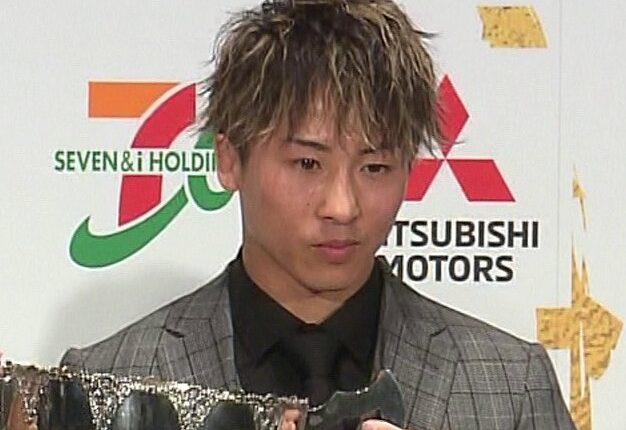
Photo: 内閣官房内閣広報室, CC BY 4.0, via Wikimedia Commons