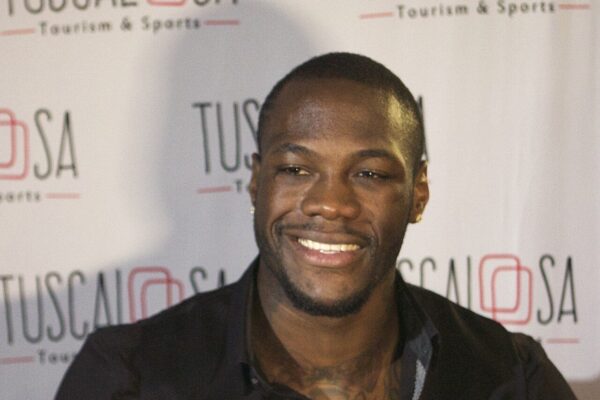

Twenty straight stoppage wins is the kind of number that follows a fighter into every arena. With Artur Beterbiev, though, the statistic only tells part of the story. The harder thing for opponents to handle was the pace: the steady walk-down, the compact punches, the sense that every round was being fought on his terms.
From Khasavyurt to the amateur elite
Artur Asilbekovich Beterbiev was born on January 21, 1985, in Khasavyurt, in Dagestan, then part of the Soviet Union. The town is more closely associated with wrestling than boxing, which makes his route into the sport stand out. He wrestled as a child before turning to boxing at 11, encouraged by his brothers.
His early years were marked by personal loss. His father died in a car accident in 2001, a blow that came while Beterbiev was still developing as a young athlete. He has cited Muhammad Ali and Mike Tyson among the boxers he admired growing up, an interesting pairing for a fighter who later blended pressure with patience.
Before the professional game, there was a long apprenticeship. Beterbiev had more than 300 amateur bouts and is widely listed with a 295-5 record. He won gold at the 2006 European Championships, took silver at the 2007 World Championships, won the 2008 World Cup, then added gold at the 2009 World Championships and another European title in 2010.
He boxed at two Olympics. At the 2008 Beijing Games, competing at light heavyweight, he reached the quarter-finals. He returned at the 2012 London Olympics as a heavyweight and again exited in the quarter-finals. Along the way he beat Sergey Kovalev in the amateurs and twice lost to Oleksandr Usyk, results that underline the level he was operating at long before television audiences knew him.
Montreal, a fresh start, and a violent pro debut
The professional chapter began in Canada. Beterbiev moved to Montreal to build his career and made his debut there on June 8, 2013, stopping Christian Cruz in the second round. That date matters because his rise moved quickly from there, and almost every early fight ended the same way: with the referee stepping in or the opponent unable to continue.
Working under promoter Yvon Michel, he wasted little time announcing himself as more than another decorated amateur. In September 2014, he stopped former world champion Tavoris Cloud in two rounds to win the NABA light-heavyweight title. Cloud was no prospect brought in to fill a slot; he was a recognizable name, and Beterbiev went through him with startling ease.
Those early years established the outline of the Artur Beterbiev record that would later become one of the sport’s talking points. He was knocking men out, yes, but he was also doing it with control. He fought from an orthodox stance, cut the ring well, and rarely looked rushed. Many punchers chase the finish. Beterbiev usually built toward it.
The first world title
His first shot at a major belt came on November 11, 2017, against Enrico Kölling for the vacant IBF light-heavyweight title. For much of the fight, Kölling stayed upright and made Beterbiev work. Then, in the 12th round, the pressure finally broke through. Beterbiev forced the stoppage and left the ring with his first world title.
That finish fit the pattern of his career. He was dangerous early, but he was often just as dangerous late. Opponents had to deal not only with power, but with attrition.
His first defenses came against solid opposition. In October 2018, he was dropped by Callum Johnson before rallying to stop him in the fourth round. It was a useful reminder that even a destructive champion can be tested. In May 2019, he halted Radivoje Kalajdzic in five rounds.
Outside the ring, that stretch included a promotional dispute with Yvon Michel. The disagreement became public and was documented in court filings and boxing coverage before Beterbiev moved into a new promotional arrangement with Top Rank.
Gvozdyk and the night he became a unifying champion
The fight that changed his standing in the division came in October 2019. Oleksandr Gvozdyk entered unbeaten and holding the WBC title. Beterbiev left with both the IBF and WBC belts after a punishing 10th-round stoppage.
It was not a one-punch knockout. It was a dismantling. Gvozdyk boxed well in spells, but the body work, pressure, and physical strength gradually shifted the fight. By the time the end came, Beterbiev had imposed the kind of bout he prefers: hard, close, and exhausting.
That win mattered because it moved him beyond the label of dangerous puncher. He was now a unified champion at 175 pounds, and one of the division’s central figures.
Three belts and a clear route to undisputed
After a period of inactivity shaped in part by the pandemic era and scheduling issues, Beterbiev returned to unify again in June 2022 against Joe Smith Jr., the WBO titleholder. The fight barely settled before it was over. Beterbiev dropped Smith repeatedly and stopped him in the second round, adding a third major belt to his collection.
By then, his knockout run had become almost surreal. His first 18 professional wins had all come inside the distance, and he kept extending the streak against world-level opposition. That is what made his numbers unusual. Plenty of prospects start with stoppages. Very few carry that pattern deep into championship fights.
He defended the IBF, WBC and WBO titles against Anthony Yarde in January 2023, stopping the British challenger in the eighth round after a hard, competitive fight. Later, in January 2024, he broke down Callum Smith and stopped him in the seventh. Smith had never previously been halted.
A planned fight with Dmitry Bivol was postponed when Beterbiev suffered a ruptured meniscus. The delay only sharpened interest. By then, the division had narrowed to one obvious question: who was the best light heavyweight in the world?
Dmitry Bivol, undisputed glory, and a first defeat
They finally met on October 12, 2024. Bivol brought the WBA title, Beterbiev brought the IBF, WBC and WBO belts, and the winner would become the undisputed light-heavyweight champion of the four-belt era.
Beterbiev won by majority decision.
That result gave him the WBA title and made him the first undisputed champion at 175 pounds in the four-belt era. It also changed the way his career was discussed. For years, he had been defined by stoppages. Against Bivol, an elite technician with excellent feet and timing, he had to win a close fight on the scorecards. He did.
The rematch came on February 22, 2025, and this time the verdict went the other way. Bivol won a 12-round majority decision, handing Beterbiev the first loss of his professional career and taking the undisputed championship.
That defeat closed one of the most distinctive opening runs in modern boxing: 21 wins to start a career, the first 20 by knockout or stoppage. The Artur Beterbiev record after the rematch stood at 21-1 with 20 knockouts.
How he fights
Calling him an aggressive pressure fighter is accurate, but incomplete. Beterbiev does not simply march forward and throw. His best work comes from how he shortens the ring, positions his feet, and makes opponents punch while moving backward. That drains them. Once they begin reacting instead of choosing, his offense becomes much harder to survive.
His power is real, but so is his timing. He punches compactly, especially at mid-range, and he is comfortable breaking an opponent down over several rounds. He can jab his way in, work the body, and then suddenly turn a controlled exchange into a crisis.
That is why the knockout percentage became such a defining number. A 95 percent stoppage rate is rare at any level. To carry it into title fights against champions and contenders is rarer still.
Life outside the ring
Away from boxing, Beterbiev has kept much of his private life private. He has lived in Montreal since relocating there for his professional career, and that city became the base for his rise in the sport.
Published profiles and boxing coverage identify him as married to Medina, and reports say the couple have four children. Because Beterbiev does not make his family life a public performance, details beyond that are limited and should be treated cautiously unless confirmed by him directly.
There have also been public appearances away from fight promotion. In late 2024, he took part in a charity dinner for orphans organized by 313 Al Madina Charity. In early 2025, he also appeared at an event connected to the Gaza Emergency Appeal with Human Appeal.
Commercially, he has been linked to Rival boxing equipment and other sponsorships, though exact endorsement terms have not been publicly detailed. Financial estimates vary widely depending on the source. Celebrity-wealth websites and sports-business outlets have published different figures, so any single Artur Beterbiev net worth number should be treated as an estimate rather than a verified fact.
One unusual public honor did become official: after his undisputed win over Bivol, he was named an honorary citizen of the Chechen Republic.
FAQ
What is Artur Beterbiev’s boxing record?
He is 21-1 as a professional, with 20 wins by knockout.
Is Artur Beterbiev undefeated?
No. His first professional loss came against Dmitry Bivol in their rematch, a majority decision over 12 rounds.
Where is Artur Beterbiev from?
He was born in Khasavyurt, Dagestan, and later built his professional career out of Montreal, Canada.
Did Artur Beterbiev become undisputed champion?
Yes. He beat Dmitry Bivol by majority decision in October 2024 to become the undisputed light-heavyweight champion.
How many knockouts does Artur Beterbiev have?
He has 20 knockout wins in 21 professional victories.
Who trained Artur Beterbiev?
For his professional career in Canada, he has been associated with trainer Marc Ramsay.
Photo: Говорит Сочи (Эфкате), CC BY 3.0, via Wikimedia Commons