
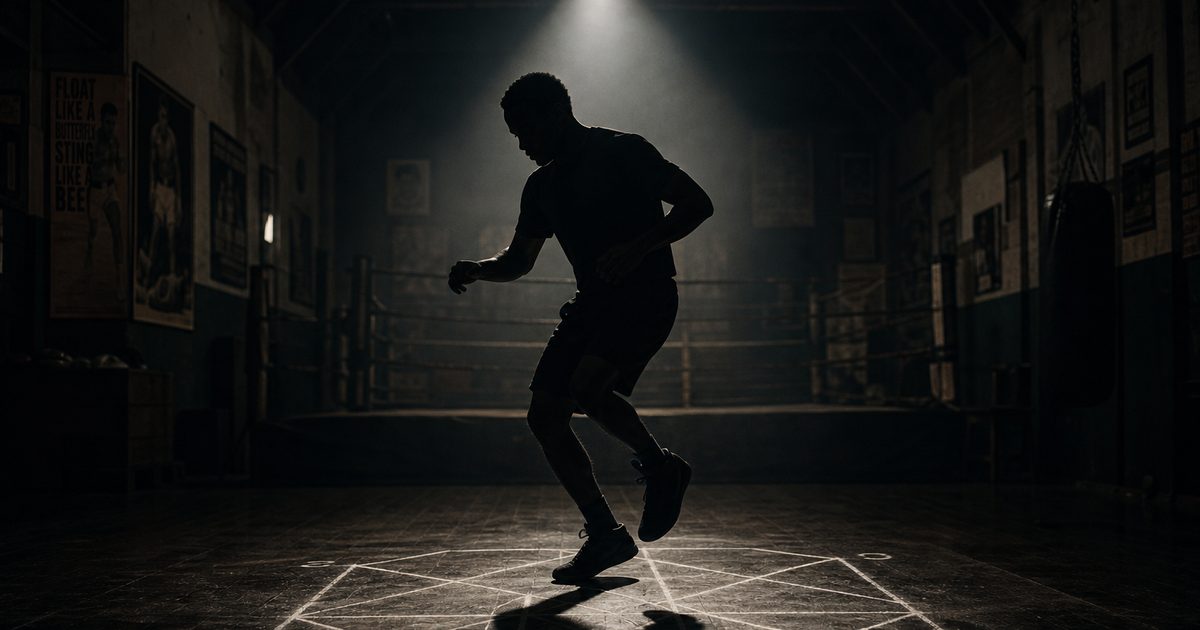
Two Olympic gold medals came before the paid ranks, and a world title arrived by fight No. 3. Few boxers have moved through the sport as quickly, or as precisely, as Vasiliy Lomachenko.
The Ukrainian southpaw, born Vasyl Anatoliyovych Lomachenko in Bilhorod-Dnistrovskyi, built his name on timing, angles and footwork that often made experienced opponents look a step behind. Long before he became a three-division world champion, he was already one of amateur boxing’s standout talents, with a reported record of 396-1 and major titles at every level.
Early life: built by repetition, balance and his father’s eye
Lomachenko was born on February 17, 1988, in Bilhorod-Dnistrovskyi, then part of the Ukrainian SSR in the Soviet Union. Boxing was in the family from the start. His father, Anatoly Lomachenko, became his trainer and the central architect of his style.
That style did not begin with gloves alone. Anatoly famously had his son study traditional dance and gymnastics as a boy, using them to sharpen balance, rhythm and coordination before boxing became the full-time focus. Years later, those qualities were still visible every time Lomachenko pivoted out of range or stepped around an opponent’s lead foot.
The amateur record attached to his name, 396 wins and 1 loss, has long been part of his reputation. So has the detail that he avenged the lone defeat twice. Whether every bout from that vast amateur run can be independently reconstructed is another matter, but the broad picture is clear: he was an elite talent almost from the beginning.
His medals came quickly. He won gold at the 2004 Cadet European Championships, added gold at the 2006 Junior World Championships, then took silver at the 2007 World Championships. By 2008, he was no longer a prospect in the amateur system. He was one of its leading figures.
That year he won the European Championships at featherweight and then claimed Olympic gold in Beijing. He also received the Val Barker Trophy as the Games’ outstanding boxer. He followed with gold at the 2009 World Championships, another world title at the 2011 Worlds at lightweight, and a second Olympic gold medal at the 2012 London Games.
He was not the only boxer to win Olympic gold in two weight classes, several men had done that before him, but he did join a very small group, and he did it with unusual authority.
The professional gamble: title shot in fight two
When Lomachenko turned professional with Top Rank, the plan was aggressive from the outset. He debuted on October 12, 2013, stopping Jose Ramirez in the fourth round. There was no long apprenticeship.
His second fight, in March 2014, was a title shot against Orlando Salido for the WBO featherweight belt. It remains one of the key nights of his career because it showed both his ambition and the rough edges of the professional game. Salido won a split decision in a bruising, messy fight full of body work and controversy. He had also come in overweight, meaning he could not win the title himself.
Lomachenko lost, but the defeat did little to slow his rise. Three months later, in June 2014, he faced Gary Russell Jr. for the vacant WBO featherweight title and won a majority decision. That made him a world champion in his third professional bout, tying the record for the fewest fights needed to win a world title in the modern era.
At featherweight, he defended the belt against Chonlatarn Piriyapinyo, Gamalier Rodriguez and Romulo Koasicha. The opposition varied, but the pattern was becoming familiar: he controlled distance, changed angles in tight spaces and forced opponents to reset over and over.
Super featherweight: the style sharpens
The next move came in June 2016, when he stepped up to super featherweight and stopped Roman Martinez in five rounds to win the WBO title. With that victory, he became a two-weight world champion in just seven fights, a remarkable pace even allowing for his amateur pedigree.
This was the stretch when the professional version of Lomachenko came fully into focus. He was not a one-punch knockout artist, and he did not need to be. He broke rhythm, stole position and piled up clean scoring shots until opponents ran out of answers.
There were title defenses against Nicholas Walters, Jason Sosa and Miguel Marriaga. Walters retired on his stool after seven rounds. Sosa lasted nine. Marriaga was stopped after seven. Then came one of the most discussed matchups of his career: Guillermo Rigondeaux in December 2017.
Rigondeaux, himself a brilliant amateur and former world champion, moved up from bantamweight to challenge him. The fight was billed as a meeting of elite technicians, but it turned one-sided quickly. Rigondeaux retired after six rounds with a hand injury, and Lomachenko kept his title.
By then, the nicknames “The Matrix” and “Hi-Tech” had stuck. They were flashy labels, but they pointed to something real. His game was based on geometry as much as force: half-steps, pivots, feints, quick entries and exits, and combinations thrown from angles opponents did not expect.
Lightweight and the biggest nights
In May 2018, Lomachenko moved up again, this time to lightweight, and met Jorge Linares for the WBA title. It was a demanding fight. Linares dropped him in the sixth round, the first knockdown of Lomachenko’s professional career, but Lomachenko rallied and stopped him with a body shot in the 10th.
That win made him a three-division world champion in his 12th fight, another record-setting milestone for speed at world level.
He added the WBO lightweight title in December 2018 by beating Jose Pedraza in a unification bout. In 2019, he outpointed Anthony Crolla and then defeated Luke Campbell to add the vacant WBC title, leaving him with three of the four major belts at 135 pounds.
For a while, the lightweight division looked set up for a longer Lomachenko reign. Instead, it produced one of the most important losses of his career. In October 2020, he faced Teofimo Lopez for the WBA, WBC, WBO and IBF titles. Lomachenko started slowly, gave away too many early rounds and lost a unanimous decision. It was his second defeat as a professional and a clear turning point.
He returned in 2021 with wins over Masayoshi Nakatani and Richard Commey, showing that the sharpness had not disappeared. Then came another high-stakes title fight, this time against Devin Haney in May 2023 for the undisputed lightweight championship.
Haney won a unanimous decision in a close, tactical fight that produced heavy debate afterward. Officially, though, it went down as Lomachenko’s third professional loss.
He climbed back once more. In May 2024, he stopped George Kambosos Jr. in the 11th round to win the vacant IBF lightweight title, becoming a major belt-holder again deep into his career.
Vasiliy Lomachenko record and style
His professional record stands at 18 wins and 3 losses, with 12 knockouts. The numbers matter, but they do not fully explain why he has been so closely studied by boxers and trainers.
Lomachenko fights from the southpaw stance, yet his real advantage has never been stance alone. It is the way he uses space. He can lead, counter, or switch tempo in the middle of an exchange. He often turns defense into attack not by retreating, but by stepping just off line and making the next punch come from a new angle.
The dance and gymnastics background is part of that story, but so is the discipline imposed by his father’s training. His style looks creative in the ring because the preparation behind it was so structured.
Life outside the ring
Away from boxing, Lomachenko has presented a more private image than many modern stars. He is married to Olena Lomachenko, and the couple have children. Reports and published profiles commonly identify a son, Anatoly, and a daughter, Viktoriia, though spellings vary in English-language sources.
He has long been associated with Odesa as well as his hometown of Bilhorod-Dnistrovskyi, and he spent parts of his professional career training in the United States. Publicly available reports have also linked him to business ventures including hospitality and apparel projects under the Loma name, though details on ownership structures are not always fully documented.
Several personal details are well established. He has spoken openly about his Orthodox Christian faith and has described his boxing ability as a gift from God. Training outside the gym has also been part of his image for years, with running and swimming often mentioned in camp coverage.
The most sensitive part of his public life has involved Ukraine’s war and the politics around religion and identity. In 2022, Lomachenko posted images indicating he had joined a territorial defense battalion in Bilhorod-Dnistrovskyi after Russia’s full-scale invasion. Some later reports and commentary described him more broadly as having served, but the exact scope and duration of that service have not always been clearly documented in public sources.
He has also faced criticism in Ukraine over social media posts and his association with the Ukrainian Orthodox Church linked to the Moscow Patriarchate. In early 2023, the civic movement CHESNO included him in its so-called Register of State Traitors after he shared a sermon it considered anti-Ukrainian. That designation came from the organization, not from any criminal conviction. Coverage of Lomachenko’s public image should keep that distinction clear.
Earnings and net worth
Reported figures for Vasiliy Lomachenko net worth vary widely, and many are speculative. Purse numbers in boxing are often incomplete unless disclosed in court filings, commission documents or by the fighters and promoters themselves.
What is clear is that his biggest lightweight fights, including bouts with Lopez, Haney and Kambosos, were major events by modern boxing standards. Beyond that, any total career-earnings estimate should be treated cautiously unless tied to named financial reporting.
FAQ
How many Olympic gold medals does Vasiliy Lomachenko have?
Two. He won Olympic gold at featherweight in 2008 and at lightweight in 2012.
What was Vasiliy Lomachenko amateur record?
It is widely reported as 396 wins and 1 loss.
When did Lomachenko win his first world title?
He won the WBO featherweight title in June 2014, beating Gary Russell Jr. in his third professional fight.
What is Vasiliy Lomachenko record in professional boxing?
His pro record is 18-3 with 12 knockouts.
What weight classes has he won world titles in?
Featherweight, super featherweight and lightweight.
Is Vasiliy Lomachenko retired?
He has held the IBF lightweight title, but retirement status can change quickly in boxing. If no official announcement has been made, it is safer to describe him as inactive rather than retired.