Ninety-one seconds was all Michael Spinks lasted. By then, Mike Tyson was already the youngest heavyweight champion in boxing history, but that violent burst in Atlantic City fixed his image in the public mind: a compact heavyweight who could turn the biggest nights into very short ones.
Mike Tyson: from Brooklyn trouble to Cus D’Amato’s gym
Michael Gerard Tyson was born on June 30, 1966, in Brooklyn, New York. His mother was Lorna Mae Tyson. Purcell Tyson is widely identified as his biological father, while Jimmy Kirkpatrick was the man Tyson long described as his father, though neither played a steady role in his upbringing. He grew up with an older brother, Rodney, and an older sister, Denise.
His early life was unstable and often rough. Tyson has said he was in frequent trouble as a boy, and published accounts have long repeated that he had been arrested dozens of times by age 13. What is clear is that boxing did not enter his life through a polished junior program. It entered through confinement and discipline.
At the Tryon School for Boys, a juvenile detention facility in upstate New York, counselor and former boxer Bobby Stewart noticed his raw ability. Stewart introduced him to Cus D’Amato, the trainer whose influence would shape Tyson’s career more than anyone else’s. When Tyson’s mother died in 1982, D’Amato became his legal guardian.
That relationship gave Tyson structure, but it also gave him a style. D’Amato drilled the peek-a-boo approach into him: high guard, constant head movement, quick shifts of angle, then sudden attacks to body and head. Tyson fought from an orthodox stance, but there was nothing static about him. He slipped inside taller heavyweights, got under their jab, and exploded with hooks and uppercuts. Sonny Liston was one of the fighters he admired, yet Tyson’s rhythm and footwork were distinctly his own.
His amateur run was short but productive. Tyson went 22-4, won Junior Olympic gold medals in 1981 and 1982, and captured the New York Golden Gloves heavyweight title in 1984. He also lost to Henry Tillman, who later made the 1984 U.S. Olympic team while Tyson did not. That miss mattered. It pushed him toward the professional game early.
A professional start that barely gave opponents time to settle
Tyson turned pro on March 6, 1985, in Albany, New York, stopping Hector Mercedes in the first round. The pace that followed was relentless. He fought 15 times in 1985 alone, and most of those nights ended quickly.
His first 19 professional wins all came by knockout, 12 of them in the opening round. That kind of streak can make a prospect look like a rumor until the level rises. In Tyson’s case, the knockouts kept coming as the opposition improved.
There was also personal upheaval in the middle of the surge. D’Amato died in November 1985, less than a year before Tyson won a world title. Kevin Rooney, part of the D’Amato camp, remained central to his training during the rise.
By the time Tyson reached Trevor Berbick in late 1986, he was no longer just an exciting young heavyweight. He was a genuine title threat with unusual speed for the division and a style built to overwhelm hesitant opponents.
The youngest heavyweight champion in history
On November 22, 1986, Tyson stopped Berbick in the second round to win the WBC heavyweight title. He was 20 years and nearly five months old, still the youngest man ever to win a heavyweight championship.
The title did not slow him down. In March 1987, he beat James “Bonecrusher” Smith by unanimous decision to add the WBA belt. In August of that year, he outpointed Tony Tucker to win the IBF title. With that, Tyson became the first heavyweight to hold the WBA, WBC and IBF championships at the same time.
This was the stretch when his career moved from fast rise to full control of the division. He defended the championship against Tyrell Biggs, Larry Holmes, Tony Tubbs, Michael Spinks, Frank Bruno and others. Holmes, the former long-reigning champion, was stopped in four rounds in January 1988. Spinks, unbeaten and lineal champion in the eyes of many, lasted just 91 seconds in June 1988.
Tyson’s reign as undisputed heavyweight champion ran from 1987 to 1990. Depending on how title defenses are counted across the unified belts, he made nine successful defenses as undisputed champion after unifying against Tucker, and 10 successful defenses of a heavyweight world title from his first title win over Berbick through the Carl Williams fight. The broad point is unchanged: for several years, he was the central figure in the division.
The Buster Douglas upset changed the story
In Tokyo in February 1990, the script finally broke. James “Buster” Douglas, a heavy underdog, outboxed Tyson and stopped him in the 10th round. It remains one of the biggest upsets in heavyweight history.
The loss did more than take the titles. It ended the sense of inevitability around Tyson. He was still young, still dangerous, and still one of boxing’s biggest attractions, but the aura had cracked.
He fought on and beat Henry Tillman and Alex Stewart later that year, then lost to Evander Holyfield was often discussed as the fight the division needed. It did not happen then. Tyson’s life outside the ring intervened more dramatically than any opponent could.
Prison, release and a second championship run
In 1992, Tyson was convicted of rape in Indiana. He served about three years in prison and was released in 1995. That absence split his career into two clear acts: the ferocious young champion and the comeback star trying to reclaim the top of the division.
He returned in August 1995 and quickly drew huge crowds and purses again. Tyson stopped Peter McNeeley in his comeback bout, then beat Buster Mathis Jr. before moving back into title fights. In March 1996, he stopped Frank Bruno to win the WBC heavyweight title for a second time. Later that year, he knocked out Bruce Seldon in the first round to take the WBA belt.
Some purse figures from this period vary by source, so the largest numbers are best treated cautiously. It is widely reported that Tyson earned tens of millions for the Bruno rematch, the Seldon fight and the two Holyfield bouts, but exact totals differ depending on the outlet.
Holyfield, the ear-biting incident and another turn
The rivalry with Evander Holyfield defined Tyson’s second peak. They met in November 1996, with Tyson defending the WBA title. Holyfield stopped him in the 11th round in one of the era’s biggest fights.
Their rematch in June 1997 became infamous for reasons that had little to do with tactics. Tyson bit Holyfield’s ear, was deducted points, then bit him again. The fight was stopped and Tyson was disqualified in the third round. The Nevada State Athletic Commission later revoked his boxing license and fined him; he was relicensed the following year.
That night became inseparable from Tyson’s public image. So did the pattern around it: brilliance in the ring, chaos around it, and a career that could not be told cleanly as sport alone.
The later years: big events, uneven results
Tyson returned to the ring in 1999. The old menace still flashed, but the consistency was gone. He remained a major draw, which is not the same thing as being the division’s dominant fighter.
One of the last giant events of his career came on June 8, 2002, when he challenged Lennox Lewis for the WBC, IBF, IBO and lineal heavyweight titles. Lewis controlled the fight and knocked Tyson out in the eighth round.
Tyson fought four more times after that. He beat Clifford Etienne in 49 seconds in 2003, then lost to Danny Williams in 2004 and Kevin McBride in June 2005. After the McBride defeat, he said he no longer had the heart to continue and stepped away from professional boxing.
His official professional record closed at 50 wins, 6 losses and 2 no contests, with 44 knockouts.
A late return against Jake Paul
Nearly two decades after his last sanctioned pro bout, Tyson returned to the professional ring against Jake Paul on November 15, 2024, in Arlington, Texas. Paul won by unanimous decision over eight two-minute rounds.
That result changed Tyson’s final record to 50-7, with 44 knockouts and 2 no contests. Whatever anyone thought of the matchup, it added one more unusual chapter to a career that had already contained several lives’ worth of headlines.
Reports on his purse for the bout have varied, with many outlets estimating he earned at least eight figures. As with many Tyson financial figures, exact totals are difficult to verify publicly.
Why Mike Tyson was so hard to handle
At 5 ft 10 in with a 71-inch reach, Tyson was small by heavyweight standards even in his own era. That made his success more striking. He had to cross distance against taller men who usually enjoyed both reach and leverage advantages.
He did it with timing, balance and speed. The head movement drew attention, but the real engine of his style was how quickly he turned defense into offense. A slip became a step. A step became a hook to the body. Then came the right hand upstairs.
His knockout ratio, 44 stoppages in 50 wins, helps explain the fear he created. So does the opening run: 19 straight victories by knockout to begin his professional career. For a period in the mid-to-late 1980s, a Mike Tyson fight often felt less like a long contest than a test of how long the other man could keep him outside.
Life outside the ring
Tyson’s private life has long been public, though not every detail is equally well documented. He married actor Robin Givens in 1988; they divorced the following year. He later married Monica Turner in 1997, and that marriage ended in divorce in 2003. In 2009, he married Lakiha Spicer.
He has spoken openly about family, loss and fatherhood. Tyson has several children, though published reports differ on the exact count depending on how family members are listed in older coverage. It is safer to say he is the father of multiple children, including Amir, Rayna, Milan, Morocco and Miguel, among others. His daughter Exodus died in 2009, a devastating personal loss he has discussed in interviews.
Outside boxing, he has worked in film and television, launched the podcast Hotboxin’ with Mike Tyson, and built business interests including the cannabis brand Tyson 2.0. He has also spoken publicly about sobriety, mental health and the effort to build a calmer life after years of turmoil.
Claims about his homes, land holdings and exact net worth often shift from outlet to outlet and are rarely documented in full public detail. The same caution applies to old bits of Tyson lore, including the reported teenage nickname “The Tanned Terror,” which appears in some retellings but remains disputed.
Trouble outside the ropes
Tyson’s boxing story cannot be separated from his legal troubles, but they should be stated plainly rather than sensationally.
The most serious was his 1992 rape conviction in Indiana, which led to his prison sentence. In 1999, he served jail time after pleading no contest to misdemeanor assault charges stemming from a 1998 traffic incident. In 2007, he was sentenced in Arizona after pleading guilty to drug possession and driving under the influence charges.
Those episodes repeatedly interrupted his career and reshaped how he was seen. They are part of the record, just as much as the belts and knockouts.
Hall of Fame place and what remains
Tyson was inducted into the International Boxing Hall of Fame in 2011. The core facts of his career have held up through every retelling: he became the youngest heavyweight champion in history, unified the WBA, WBC and IBF titles, ruled the division at a young age, and produced one of the most explosive runs the heavyweight class has seen.
He was never a simple figure, and his career was never a straight line. That is part of why the story still holds. It begins with a teenager from Brooklyn, sharpened in Cus D’Amato’s system, and it stretches all the way to a late-career return that almost nobody would have imagined when he first tore through the division.
FAQ
When did Mike Tyson become heavyweight champion?
He won the WBC heavyweight title on November 22, 1986, by stopping Trevor Berbick in the second round.
What is Mike Tyson’s boxing record?
After the Jake Paul fight, his professional record stands at 50-7 with 44 knockouts and 2 no contests.
How old was Mike Tyson when he won the heavyweight title?
He was 20 years old, making him the youngest heavyweight champion in boxing history.
Why was Mike Tyson disqualified against Evander Holyfield?
He was disqualified in their 1997 rematch for biting Holyfield’s ear.
Who trained Mike Tyson early in his career?
Cus D’Amato was the key early trainer and later became Tyson’s legal guardian.
Did Mike Tyson return to professional boxing?
Yes. After retiring in 2005, he returned for a sanctioned professional fight against Jake Paul in November 2024.
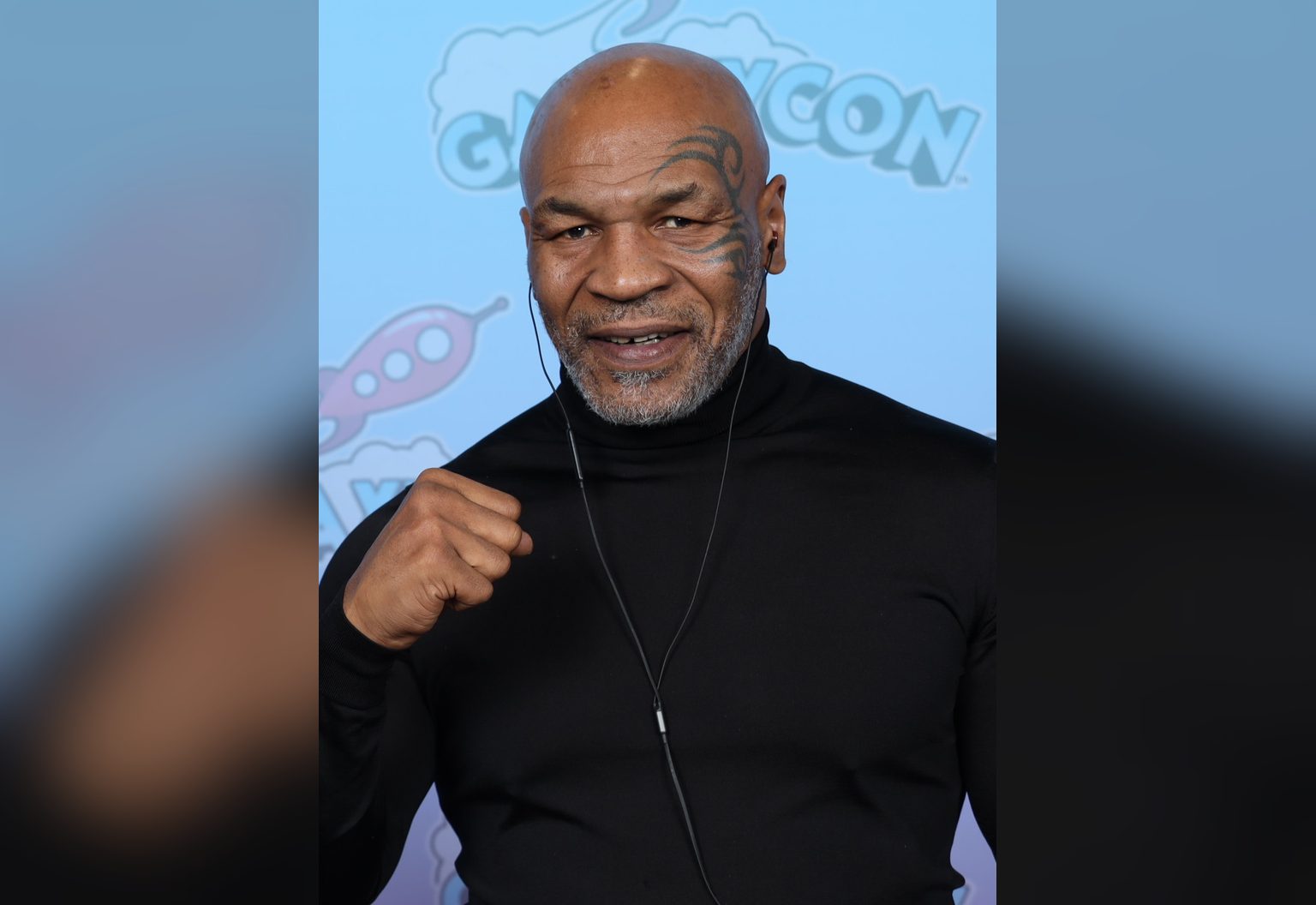
Photo: Super Festivals from Ft. Lauderdale, USA, CC BY 2.0, via Wikimedia Commons