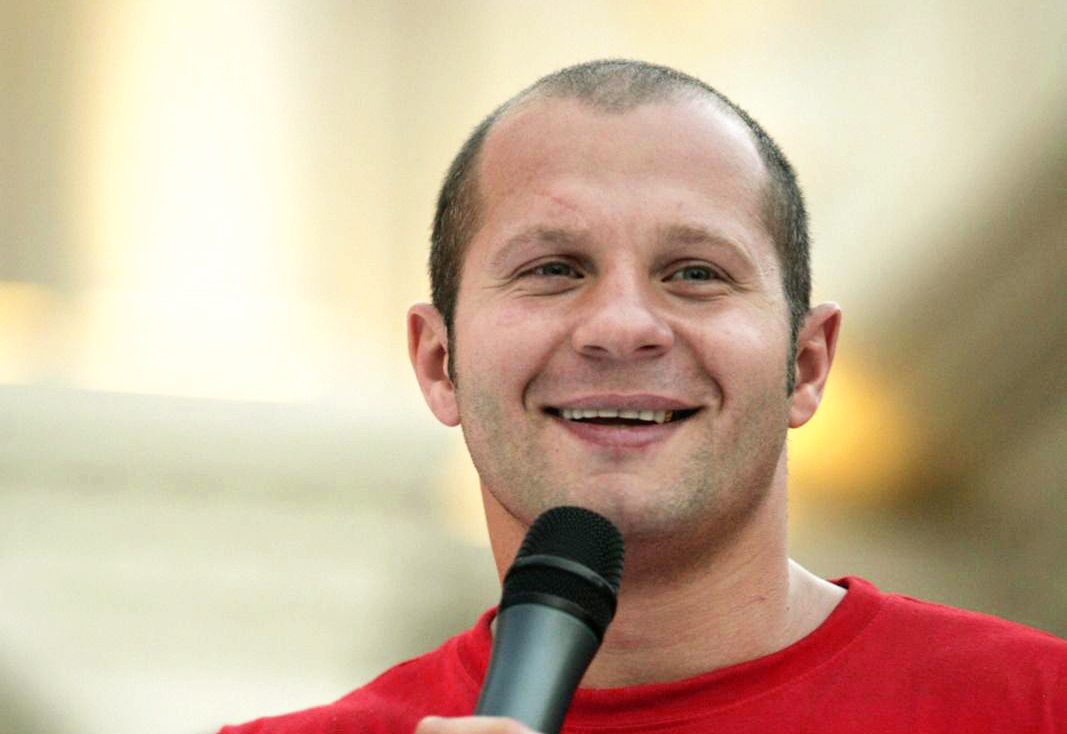
The image that stuck was not a knockout. It was Kevin Randleman launching Fedor Emelianenko high into the air in Saitama, spiking him on his head, and somehow watching the Russian get up, settle himself, and finish the fight with a kimura. That sequence captured a lot of what made Emelianenko such a durable reference point in heavyweight MMA: balance under pressure, fast decisions in bad positions, and an almost unnerving lack of panic.
For years, Fedor Emelianenko stood near the center of the sport’s heavyweight conversation. He finished his mixed martial arts career with a 40-7 record and 1 no contest, held the PRIDE heavyweight title from 2003 until the promotion folded, and went unbeaten from April 2001 until June 2010 if the no contest is set aside. He never fought in the UFC, a fact that became part of his story almost as much as the wins themselves.
From Rubizhne to Stary Oskol
Emelianenko was born on September 28, 1976, in Rubizhne, then part of the Ukrainian SSR in the Soviet Union. He later grew up and built his fighting life in Stary Oskol, the Russian city most closely tied to his name.
His sporting base came early. At 11, he started training in judo and sambo, first under Vasily Gavrilov and later under Vladimir Voronov, who remained one of the key coaches of his career. Before the wider MMA audience knew him, he had already put together the kind of background that translated well to heavyweight fighting: strong balance, clean entries, comfort in clinches, and a habit of staying composed in scrambles.
His life outside the gym was not glamorous. He graduated from trade school as an electrician in 1994, then served in the Russian Army from 1995 to 1997, first as a firefighter and later in a tank division. That stretch is often mentioned because it fits the public image he carried into the ring and cage: reserved, disciplined, not especially interested in self-promotion.
A serious amateur base before the cage
Long before his PRIDE run, Emelianenko was already a decorated combat sambo competitor. He became a multiple-time Russian national champion and a four-time world champion in combat sambo. He also won gold at the 1997 European Sambo Championships.
In judo, he was not as decorated internationally, but he was no novice. He took bronze at the Russian national championships in 1998 and 1999. Those results matter because they explain the shape of his MMA game. Even when he was throwing quick combinations or swarming with punches on the ground, the structure underneath was sambo and judo. He knew how to off-balance bigger men, how to transition quickly, and how to turn a scramble into a finish.
Early MMA years: RINGS and the road to Japan
His professional debut came on May 21, 2000, at RINGS Russia: Russia vs. Bulgaria, where he stopped Martin Lazarov. The first years of his career were spent largely in RINGS, and they were important development years rather than a mere prelude.
He lost once early, to Tsuyoshi Kohsaka in December 2000, but that result came by doctor stoppage after an illegal elbow cut him open. Because elbows were not permitted in RINGS at the time, the bout is officially recorded as a no contest, not a loss. That detail matters when discussing the long unbeaten stretch that followed.
From there, his rise accelerated. He won the RINGS King of Kings 2001 tournament and later captured the RINGS Openweight Championship. By the time he moved fully into PRIDE, he was no longer just a prospect from Russia. He was already one of the most complete heavyweights outside North America.
PRIDE and the years that defined his reputation
In March 2003, Emelianenko met Antônio Rodrigo Nogueira at PRIDE 25 and won a unanimous decision to take the PRIDE heavyweight title. Nogueira was one of the division’s key names, and beating him cleanly gave Emelianenko more than a belt. It gave him status.
The rivalry with Nogueira stretched across three fights, though only one was conclusive. Their second meeting in 2004 ended in a no contest after an accidental clash of heads opened a cut on Emelianenko. Their third, at Shockwave 2004 on New Year’s Eve, ended with another decision win for the Russian. Across those meetings, the pattern was clear: Nogueira was dangerous from his back and experienced everywhere, but Emelianenko’s speed and top control repeatedly tilted the fight.
Then came the Randleman fight in June 2004, still one of the most replayed moments of his career. The suplex looked like disaster. The finish came minutes later.
In August 2005, he faced Mirko Cro Cop in one of PRIDE’s biggest heavyweight matchups. Cro Cop entered as perhaps the division’s most feared striker. Emelianenko answered with pressure, clinch work, takedowns, and enough stand-up success to win a unanimous decision. It was not his flashiest performance, but it was one of his most complete.
His final PRIDE title defense came against Mark Hunt at Shockwave 2006. Hunt had accepted the fight on short notice and was a dangerous puncher with elite kickboxing credentials. Emelianenko adapted, took the fight where he wanted it, and finished with a kimura in the first round. When PRIDE folded soon after, he left as its reigning heavyweight champion.
Unbeaten across promotions
The unbeaten run is one of the central facts of the Fedor Emelianenko record. From the no contest with Kohsaka in late 2000 until Fabricio Werdum submitted him in 2010, he did not lose. That stretch covered nearly a decade and 28 bouts.
After PRIDE, he fought in Yarennoka! and BodogFIGHT, then entered a period tied to Affliction and M-1 Global. In July 2008, he needed only 36 seconds to submit former UFC heavyweight champion Tim Sylvia with a rear-naked choke. It was one of the sharpest statements of his post-PRIDE years.
Six months later, in January 2009, he knocked out Andrei Arlovski. The finish came when Arlovski rushed in with a flying knee attempt and Emelianenko met him with a short right hand that shut the fight down instantly. It remains one of the cleanest counterpunch knockouts of his career.
This was also the period when the question of a UFC move followed him constantly. It never happened. Contract issues, co-promotion demands, and the structure around M-1 Global were all part of the public discussion, but the simple fact is that one of the sport’s most famous heavyweights spent his entire career outside the UFC.
Strikeforce and the end of the streak
By the time he entered Strikeforce, the aura around him was still strong, but the division had changed and so had he. In June 2010, Fabricio Werdum submitted him with a triangle-armbar in the first round. It was the first definitive loss of his MMA career and the end of the unbeaten stretch.
The downturn continued. Antônio Silva stopped him after the second round of their February 2011 bout, with the cageside doctor ending it because of swelling and damage. In July 2011, Dan Henderson caught him in a wild exchange and finished him in the first round.
Those three defeats did not erase what came before, but they did change the tone of his career. For the first time, Emelianenko looked vulnerable in ways that had once seemed hard to imagine.
Late-career chapters: M-1, Rizin, EFN and Bellator
He steadied himself with three straight wins in 2011 and 2012, beating Jeff Monson, Satoshi Ishii, and Pedro Rizzo. The Rizzo finish, a first-round TKO in June 2012, was followed by what looked like retirement.
Instead, he returned in 2015. In Japan, at Rizin’s New Year’s Eve show, he submitted Jaideep Singh in the first round. In 2016, he beat Fabio Maldonado by majority decision in Russia, though that result remains controversial. Many observers scored the fight for Maldonado after Emelianenko was badly hurt in the opening round. The controversy was heightened by the fact that the bout took place under the oversight of the Russian MMA Union, where Emelianenko held a leadership role.
His final major run came in Bellator. He lost quickly to Matt Mitrione in 2017, then entered the Bellator Heavyweight World Grand Prix and produced one last burst of momentum, knocking out Frank Mir and Chael Sonnen in the first round. That set up a title fight with Ryan Bader in January 2019, but Bader stopped him in 35 seconds.
The last fight of his career came at Bellator 290 on February 4, 2023, again against Bader. Emelianenko lost by first-round TKO and retired afterward. His final professional mark stood at 40 wins, 7 losses, and 1 no contest, with 16 wins by knockout and 15 by submission.
How he fought
At 6 feet tall with a 74-inch reach, Emelianenko was not a giant by modern heavyweight standards. He made that almost irrelevant.
His style was built on compact efficiency. He fought from an orthodox stance, carried his hands low at times, and threw short, hard combinations rather than wide power shots. In the clinch and on the mat, his sambo background showed constantly. He could trip, throw, pass, strike, and submit without making those transitions look forced.
What separated him from many heavyweights was not just versatility but speed of decision-making. He reacted quickly when opponents overcommitted. He also punched effectively from top position, often forcing openings for submissions or stoppages. The nickname “The Last Emperor,” coined during his years in Japan, fit the public image: quiet, controlled, difficult to rattle.
Life outside the cage
Away from fighting, his life has long been tied to family, religion, and Russian combat sports administration. He is a practicing Orthodox Christian and has often been associated with Stary Oskol as both home base and part of his public identity.
His family life has been widely reported, though some details are best kept to what is on record. He married Oksana in 1999, the couple divorced in 2006, and they later remarried in 2014 according to Russian media reports. He has daughters from his marriages, and his brother Alexander Emelianenko also became a well-known fighter. Another brother, Ivan, trained in combat sports as well.
Outside competition, Emelianenko became a co-owner of M-1 Global and served as president of the Russian MMA Union. He has also held public roles connected to sport and physical culture in Russia. In 2011, he was reported to have joined the Champions for Peace club. He also appeared in the film The Key of Salamander.
There have been periodic comeback stories since retirement, but they remain just that unless formally announced. Reports have linked him to possible boxing discussions, including a reported Andrei Arlovski rematch and other one-off events. None of those rumors changed his official MMA status: retired since the Bellator loss to Bader.
FAQ
Is Fedor Emelianenko retired?
Yes. He retired from MMA after losing to Ryan Bader at Bellator 290 on February 4, 2023.
Did Fedor Emelianenko ever fight in the UFC?
No. He never competed in the UFC.
What was Fedor Emelianenko’s MMA record?
He finished with a 40-7 record and 1 no contest.
Why is Fedor Emelianenko called The Last Emperor?
The nickname came from his years in Japan and reflected his calm, controlled presence.
Where was Fedor Emelianenko born?
He was born in Rubizhne, in the former Ukrainian SSR of the Soviet Union, now in Ukraine.
What was Fedor Emelianenko’s fighting style?
He blended combat sambo, judo, boxing, ground-and-pound, and submissions into a compact heavyweight game.
Photo: Larry Burton on Picasa Web Albums, CC BY-SA 3.0, via Wikimedia Commons