
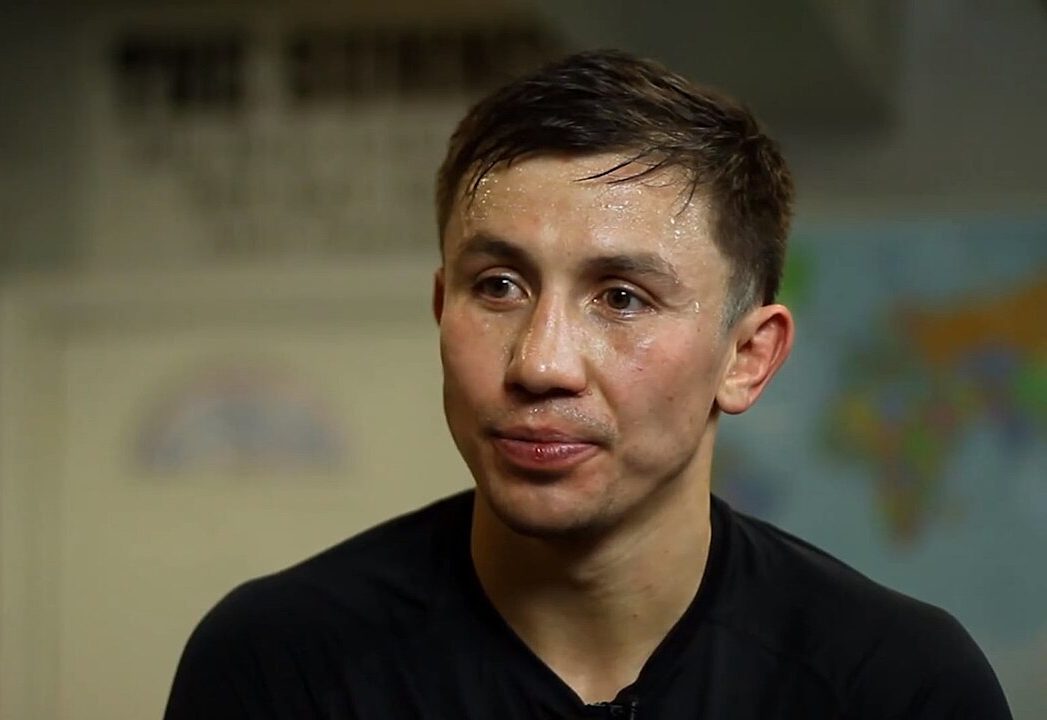
Twenty title defenses tell part of the story. The other part is how Gennadiy Golovkin did it: inching forward behind a high guard, cutting off the ring without wasting steps, and breaking opponents down with a kind of calm violence that became his trademark at middleweight.
Known worldwide as GGG or Triple G, Golovkin closed his professional career with a 42-2-1 record and 37 knockouts. He spent years as the division’s standard-bearer, unified major belts, and built a reputation for unusual durability. Across a vast amateur and professional run, he was never stopped.
From Karaganda to the world stage
Golovkin was born on April 8, 1982, in Karaganda, in the former Kazakh SSR of the Soviet Union. He grew up in the Maikuduk district, a hard-edged environment that shaped plenty of fighters before him. Boxing entered his life early, around age 8, and quickly became more than an after-school activity.
His family background was mixed: his father was Russian, his mother Korean. He also had a twin brother, Maxim, usually known as Max, who boxed too and later became part of his team. There was tragedy in the family as well. Two older brothers, Sergey and Vadim, died while serving in the Soviet army, a loss often mentioned in accounts of Golovkin’s early life.
Stories from his childhood have long circulated, including the oft-repeated claim that his older brothers matched him with older boys or young men in rough sparring situations. That anecdote fits the image of the fighter he became, though details vary depending on the source.
Before the professional spotlight found him, he had already built one of the strongest amateur résumés of his generation. His amateur record is commonly listed as 345-5, though some record-keeping sources differ on the exact loss total. What is not in dispute is the medal haul.
He won gold at the 2000 Junior World Championships, gold at the 2001 East Asian Games, and gold at the 2002 Asian Games. In 2003, he captured middleweight gold at the World Championships. At the 2004 Athens Olympics, he took silver, losing in the final to Gaydarbek Gaydarbekov. By the time he turned pro, he was not a raw talent being tested on the job. He was already a polished international boxer.
The Germany years and a patient pro build
Golovkin made his professional debut in May 2006, stopping Gabor Balogh in Germany. That was the start of a long first chapter in Europe, where he fought mainly under Universum Box-Promotion and sharpened the style that would later make him a television draw in the United States.
Those early years did not bring instant global fame. They did, however, establish his habits. He came forward behind a tight stance, jabbed with authority, punched hard to head and body, and stayed balanced enough to counter when opponents tried to fire back. He was aggressive, but rarely reckless.
A key step came in August 2010, when he stopped Milton Nunez in one round to win the WBA interim middleweight title. It was brief work, but it moved him into the title picture.
From there, the belt situation around him became more complicated, as boxing titles often do. He was elevated to full WBA middleweight champion in 2011 after Felix Sturm vacated the title. He also held the IBO belt, though that sanctioning body is not counted among boxing’s traditional four major organizations. What matters most is that by this point, Golovkin was no longer a prospect hidden in Europe. He was a world champion waiting for a bigger stage.
The middleweight run that defined him
Once he began fighting regularly in the United States, Golovkin’s profile changed fast. So did the scale of his opposition.
Between 2010 and 2018, he built the reign that still defines his place in boxing history. He defended his middleweight title 20 consecutive times, tying Bernard Hopkins for the most recognized defenses in the division. During that stretch he added the WBC and IBF titles to his collection and turned unification into more than a talking point.
The knockout run helped make him must-watch. From late 2008 to September 2016, he recorded 23 straight stoppage wins. That streak ended against Kell Brook in London, though even there Golovkin still won, forcing a fifth-round stoppage in September 2016 after steadily wearing the smaller man down.
Some of the most important wins of his championship years came against fighters who asked different questions. In October 2015, he stopped David Lemieux in the eighth round in a middleweight unification bout, controlling the fight with his jab before the finish came. In March 2017, he beat Daniel Jacobs by unanimous decision in a tougher, more tactical contest than many expected. Golovkin scored a knockdown in the fourth round and had to think his way through the rest.
He was often described as a puncher first, and with 37 knockouts that is fair enough. But his best work was built on more than power. He applied pressure without smothering himself. He cut off escape routes. He forced exchanges at a pace that looked manageable until opponents realized they were losing ground every round.
The Canelo fights and the debate that followed
Three dates now sit at the center of any Gennadiy Golovkin profile: September 2017, September 2018, and September 2022.
The first fight with Canelo Alvarez, in September 2017, ended in a split draw. It remains one of the most argued scorecards of the era, especially because many observers felt Golovkin had done the cleaner work behind his jab and forward pressure. The result denied him a clear signature victory, but it also pushed his fame to another level.
A year later, they met again. In September 2018, Canelo won a majority decision in a close rematch, handing Golovkin the first loss of his professional career. Once again, the scoring drew heavy debate. What could not be debated was the significance: Golovkin, long the hunter at middleweight, had finally been beaten officially.
The trilogy arrived in September 2022, but under different conditions. This time they fought at super middleweight for Canelo’s undisputed championship. Golovkin, older and less active, lost by unanimous decision. He rallied late, but the fight largely belonged to Alvarez.
Taken together, the three bouts left Golovkin with one draw and two losses against the biggest rival of his era. They also became the commercial peak of his career, the nights when his name reached furthest beyond boxing’s usual audience.
Regaining titles and closing the career
Losses to elite rivals often mark the end of a champion’s hold on a division. Golovkin managed one more meaningful turn.
In March 2019, he signed a six-fight deal with DAZN reportedly worth $100 million, according to widely published reports at the time. Later that year, in October, he faced Sergiy Derevyanchenko for the vacant IBF middleweight title. Golovkin won by unanimous decision in a hard, physical fight and also regained the IBO belt. It was not one of his easiest nights, but it restored him as a titleholder.
His final major victory came in April 2022 against Ryota Murata in Saitama, Japan. Golovkin stopped Murata in the ninth round to unify the IBF and WBA middleweight titles. That point matters because some summaries get the belt details wrong: Murata was a middleweight champion, and this was a middleweight fight, not a super middleweight title win.
After the third Canelo bout, Golovkin did not fight again. His professional career ran from 2006 to 2022, and his final record stood at 42 wins, 2 losses, and 1 draw.
Why his style held up so well
Plenty of pressure fighters burn bright and fade early. Golovkin’s game aged better than most because it was built on positioning as much as punishment.
He fought from an orthodox stance, stood 5ft 10½in with a 70-inch reach, and made those dimensions work through timing rather than flash. His jab was one of the best in modern middleweight boxing: heavy, accurate, and useful both as a scoring punch and as a steering wheel. He could walk opponents backward, freeze them with feints, then turn a small opening into a damaging combination.
The durability was just as important. Golovkin was never knocked down in his professional career, and he was never stopped as an amateur or a pro. That kind of resilience let him keep his shape under pressure and trust his own pace over 12 rounds.
For years, his knockout percentage sat among the best ever for a middleweight champion. Yet the more revealing trait may have been control. He did not simply hit hard. He made opponents fight the fight he wanted.
Outside the ring
Away from boxing, Golovkin has generally kept a private life. He has long been reported to be married to Alina Golovkina, and published profiles have said the couple have two children. Because he rarely puts family life at the center of his public image, many personal details remain deliberately low-key.
He has also spent significant time living and training in Southern California, including Santa Monica and Los Angeles, while keeping close ties to Kazakhstan. His twin brother Max remained part of his inner circle, which says something about how little his camp changed even after the biggest nights of his career arrived.
Golovkin has been involved in boxing business as well through GGG Promotions. He is also known for speaking multiple languages, including Kazakh, Russian, German, and English, a reflection of a career that crossed several boxing worlds.
One important factual note: some older bios state that he retired and then list later honors or appointments as settled fact. Those claims need care. Golovkin has stepped away from active competition, but formal retirement language has not always been consistent. Likewise, any mention of future Hall of Fame induction or later administrative roles should be tied to confirmed announcements, not assumption. If such appointments are cited, they should come from named, verifiable sources.
As for lighter folklore, internet users have occasionally linked him to the meme phrase “Good Guy Greg” because of his polite public demeanor. That is internet chatter, not an official nickname, and it belongs firmly in the rumor category.
FAQ
Is Gennadiy Golovkin retired?
He has not fought since September 2022. He is widely regarded as inactive, though retirement wording has varied.
What is Gennadiy Golovkin’s boxing record?
His final professional record is 42-2-1 with 37 knockouts.
Was Gennadiy Golovkin ever knocked down?
No official pro knockdown was recorded against him, and he was never stopped in the amateurs or the pros.
How many times did Golovkin fight Canelo Alvarez?
Three times: in 2017, 2018, and 2022.
What titles did Gennadiy Golovkin win?
He held major middleweight titles including the WBA, WBC, and IBF belts, along with the IBO title.
Where is Gennadiy Golovkin from?
He was born in Karaganda, in present-day Kazakhstan.
Photo: Mike Moss, CC BY 3.0, via Wikimedia Commons