Roy Jones Jr. was backing toward the ropes when a left hand caught him in the second round. On May 15, 2004, Antonio Tarver ended their rematch with one punch, overturning a narrow defeat six months earlier and securing the victory that would define his career.
The finish was sudden. The route to it was anything but. Tarver had spent years in amateur boxing, won an Olympic bronze medal and turned professional at 28. By the time he faced Jones, he was an experienced southpaw with enough patience to wait for an opening-and enough power to make it count.
From Florida gyms to Olympic bronze
Antonio Deon Tarver was born in Orlando, Florida, on November 21, 1968, and grew up in Tampa. He attended Chamberlain High School, but boxing eventually became the focus of an athletic youth.
His amateur career was substantial: a reported 158 wins against eight defeats, with national and international championships along the way. He won U.S. national light heavyweight titles in 1993 and 1995 and the National Golden Gloves championship in 1994.
The breakthrough came in 1995. Alongside another national title, he collected gold medals at the Pan American Games in Mar del Plata and the World Championships in Berlin. At the latter tournament, he beat Kazakhstan’s Vassiliy Jirov, an opponent who would become important again the following summer.
At the 1996 Atlanta Olympics, Jirov reversed their result in the light heavyweight semifinals. Tarver left with bronze, while Jirov went on to win gold.
It was an accomplished amateur career, but it also meant a late start in the paid ranks. Many fighters his age were already established professionals. He still had to work his way toward a title shot.
Starting over at 28
His professional debut came on February 18, 1997, at Philadelphia’s Blue Horizon. He stopped Joaquin Garcia in the second round.
Tarver won his first 16 bouts, 14 inside the distance. At 6 ft 2 in, with a 75-inch reach, he presented an awkward combination: a tall left-hander who could box patiently at range but punish opponents when they stepped into his shots.
Eric Harding exposed the limits of that early run. On June 23, 2000, Harding won their IBF title eliminator by unanimous decision, giving the unbeaten prospect his first professional loss.
The response took time. After rebuilding with three victories, Tarver met Harding again on July 20, 2002, and stopped him in the fifth round. That result put him back on the championship track.
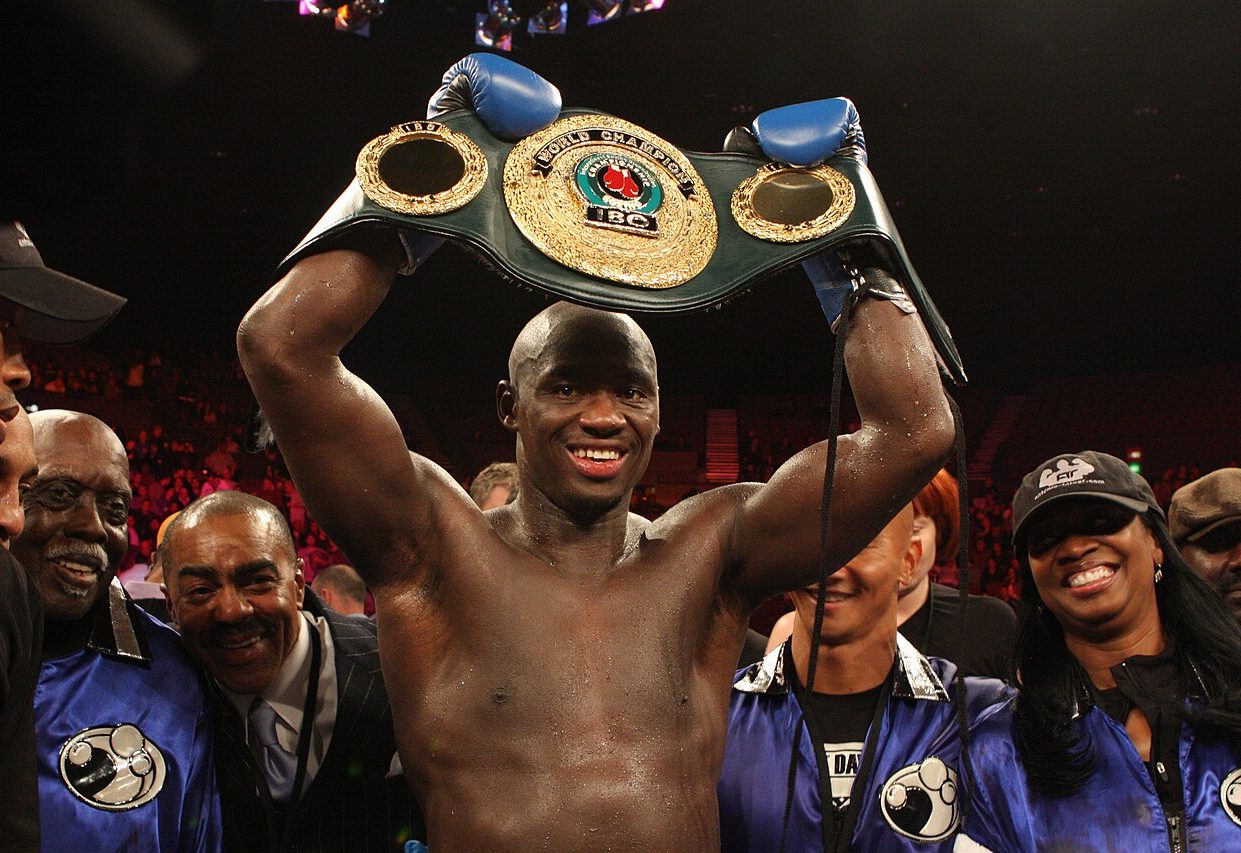
On April 26, 2003, he outpointed Montell Griffin to win the vacant WBC and IBF light heavyweight titles. Six years after turning professional, the Olympic medalist had become a world champion.
Jones, Johnson and a crowded championship picture
Roy Jones Jr. returned to light heavyweight after winning a heavyweight title against John Ruiz. His meeting with Tarver on November 8, 2003, was no comfortable homecoming.
The challenger’s reach, southpaw stance and willingness to contest exchanges made Jones work throughout. Jones won a majority decision, but the closeness of the fight gave the rematch a clear purpose.
That second meeting lasted less than six minutes. On May 15, 2004, Tarver’s left hand stopped Jones in round two, bringing him the WBC, WBA Super and IBO belts, along with recognition from The Ring.
According to contemporary reporting, he had filed for Chapter 11 bankruptcy protection eight days before the fight. His most lucrative sporting breakthrough arrived amid financial difficulties-a contrast largely invisible once the knockout became the story.
The championship picture soon grew complicated. Rather than follow separate sanctioning-body obligations, Tarver and Glen Johnson faced each other on December 18, 2004, with the IBO belt and The Ring championship at stake. Johnson won a split decision in a close, demanding fight.
Once again, Tarver improved the result in a return meeting. On June 18, 2005, he beat Johnson by unanimous decision to reclaim those honors.
He then completed the Jones trilogy on October 1, 2005. There was no repeat of the spectacular knockout, but a unanimous-decision victory settled the series two fights to one. His two wins showed different sides of his boxing: the counterpunch that ended the rematch and the sustained control required to win over 12 rounds.
Hopkins takes control, Woods offers another opening
Bernard Hopkins presented a problem Tarver could not solve. On June 10, 2006, Hopkins moved up from middleweight and won a clear unanimous decision, taking the IBO title and The Ring championship.
For a fighter accustomed to making opponents hesitate, it was an uncomfortable reversal. Hopkins controlled the exchanges and left the defending champion unable to establish his preferred rhythm.
Another title opportunity arrived on April 12, 2008, against Clinton Woods. Tarver won a unanimous decision to capture the IBF light heavyweight belt for a second time.
That reign ended against Chad Dawson on October 11, 2008. The younger southpaw won decisively on the scorecards, taking the IBF and IBO titles. Dawson also won their rematch on May 9, 2009, when only the IBO belt remained at stake.
The distinction matters: the IBF championship was not contested in their second fight.
Heavier divisions and an unsettled late chapter
Tarver moved to heavyweight in 2010, outpointing Nagy Aguilera, before dropping to cruiserweight for a challenge against Danny Green in Australia.
On July 20, 2011, he stopped Green after nine rounds to win the IBO cruiserweight title. It was a significant away victory, although that belt should be distinguished from the WBA, WBC, IBF and WBO championships generally treated as boxing’s four major world titles.
The next chapter brought a regulatory sanction. His June 2, 2012, draw with Lateef Kayode was changed to a no contest after the California State Athletic Commission reported a positive test for the anabolic steroid drostanolone. The commission suspended him for a year. Tarver denied knowingly taking a banned substance.
He returned to competition and finished his professional career with a heavyweight draw against Steve Cunningham on August 14, 2015.
His final record stands at 31 wins, six losses, one draw and one no contest, with 22 knockouts. All six defeats came on points; he was never stopped as a professional.
A southpaw who made opponents think
“The Magic Man” was not a relentless pressure fighter. His work depended on distance, timing and the threat of the left hand.
He could keep an opponent occupied with his lead right, wait for a committed attack and counter before the other man recovered his position. His height and reach helped, but patience mattered just as much. He did not need to throw constantly to make an exchange dangerous.
That approach had its drawbacks. Fighters who disrupted his timing or dictated the pace could leave him looking hesitant. At his best, though, he made experienced opponents second-guess their next move. The Jones rematch remains the clearest example of what happened when that hesitation met a well-timed punch.
From championship rounds to Rocky Balboa
The most recognizable job of his life outside competition required him to remain a boxer-just a fictional one.
In the 2006 film Rocky Balboa, Tarver played heavyweight champion Mason “The Line” Dixon opposite Sylvester Stallone. The casting gave the screen champion the movement and bearing of a real titleholder, while introducing Tarver to viewers who had never watched his fights.
It also placed an unusual interruption in an active boxing career. He was not a retired athlete making a nostalgic appearance; he was still competing near the top of the light heavyweight division when he took the role.
Broadcasting offered a different outlet. His work as an analyst included Showtime and ESPN’s Friday Night Fights, where the tactical details that shaped his own boxing became part of the conversation rather than something he had to execute under fire.
Between the film set and the commentary desk, his public career extended beyond the left hand that floored Jones.
FAQ
What is Antonio Tarver’s professional record?
He finished with 31 wins, six losses, one draw and one no contest, including 22 knockout victories. He was never stopped.
Did he beat Roy Jones Jr.?
Yes. He lost their first fight in 2003, then won by second-round knockout in 2004 and unanimous decision in 2005.
Did he win an Olympic medal?
He won light heavyweight bronze at the 1996 Atlanta Olympics, losing to eventual champion Vassiliy Jirov in the semifinals.
Which world titles did he hold?
At light heavyweight, he held WBC, IBF and WBA Super titles, as well as IBO belts and The Ring recognition. He also won the IBO cruiserweight title.
Who did he play in Rocky Balboa?
He played Mason “The Line” Dixon, the fictional heavyweight champion who faces Rocky in the 2006 film.
Photo: Eva Rinaldi, CC BY-SA 2.0, via Wikimedia Commons