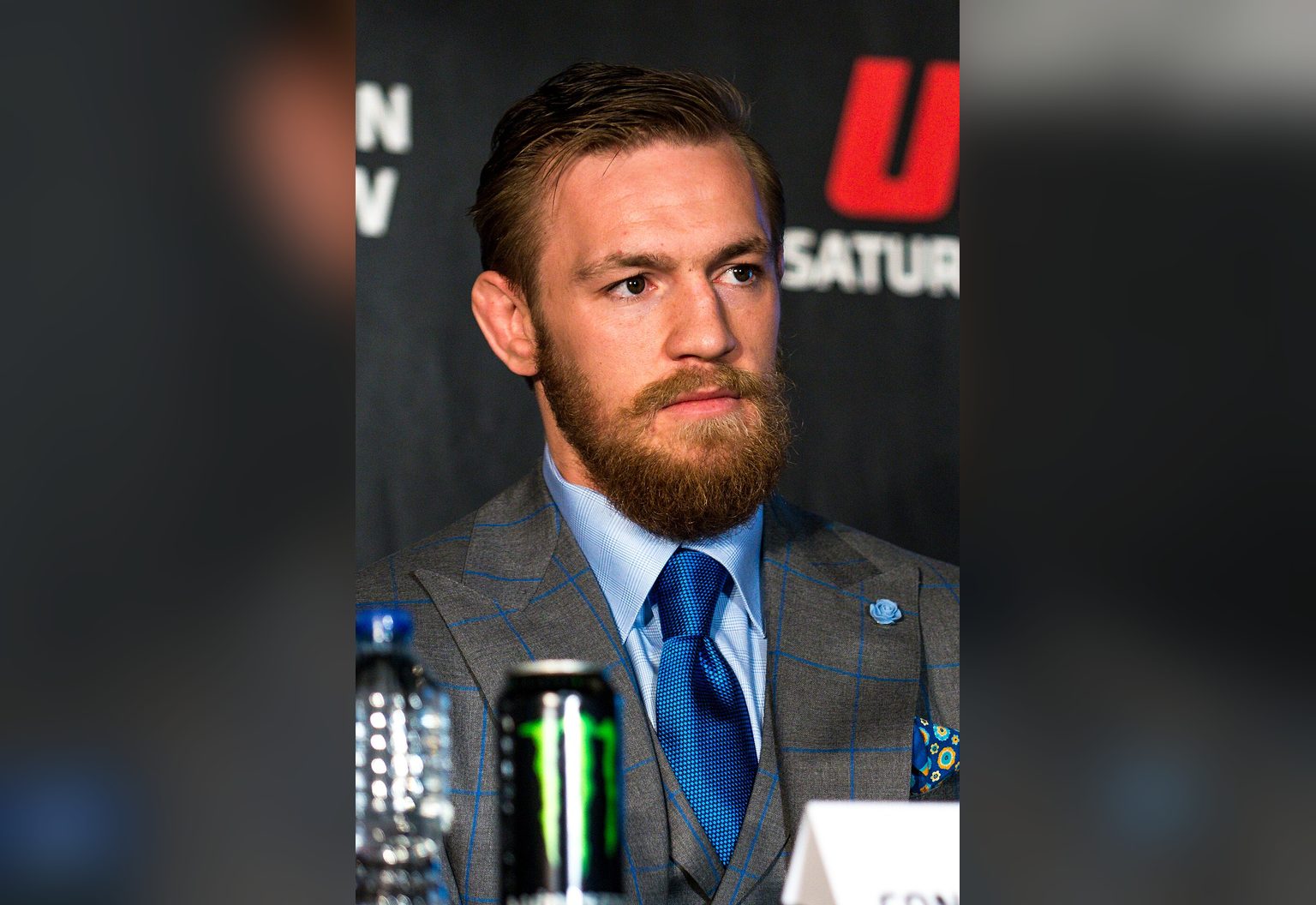
Thirteen seconds was all it took against Jose Aldo. One clean counter at UFC 194, and Conor McGregor went from a fast-rising featherweight champion-in-waiting to one of the most recognizable figures the sport has produced.
That moment still sits at the center of his story, but it was only one part of it. McGregor’s career has moved through small Irish shows, Cage Warriors titles, a rapid UFC climb, a second belt at lightweight, a crossover boxing event with Floyd Mayweather Jr., and a long stretch in which his results and his public life were both examined in unusual detail. The fighter from Crumlin built his reputation on timing, range control and a left hand that could change a fight in an instant. He also became a figure whose life outside the cage often competed with the fighting itself.
From Crumlin to the local fight circuit
Conor Anthony McGregor was born on July 14, 1988, in Crumlin, a working-class suburb of Dublin. Before mixed martial arts took over, he spent time playing football with Lourdes Celtic and boxing at Crumlin Boxing Club, where he started as a boy. Those early habits stayed with him. Even when he became a complete MMA fighter, the base was obvious: measured footwork, comfort at range, and a preference for making opponents pay for mistakes rather than overwhelming them with volume.
For a period, he also worked as a plumber’s apprentice. In later retellings of his rise, that detail became part of the image: a young fighter trying to make a living while chasing a career that offered no guarantees. Reports from that stage of his life have said he relied at times on social welfare while committing himself to training, though those accounts are usually told secondhand.
His amateur MMA debut came on February 17, 2007, when he stopped Kieran Campbell in the first round. The professional debut followed the next year. On March 8, 2008, at Cage of Truth 2 in Dublin, he beat Gary Morris by second-round TKO. The venues were small, the audience local, but the outline of the future fighter was already there: relaxed posture, sharp counters, and real belief in his own timing.
Learning years and the Cage Warriors breakthrough
The early professional run was not spotless. McGregor lost twice in his first eight fights, submitted by Artemij Sitenkov in 2008 and Joseph Duffy in 2010. Those defeats matter in the shape of his career because they came before the fame, before the title belts, and before the image of him as a front-running finisher hardened into public memory. He had to rebuild.
He did that on the Irish and British regional scene, especially under the Cage Warriors banner. By the time 2012 arrived, he had gathered momentum and started to look too polished for that level. In June of that year, he stopped Dave Hill to win the Cage Warriors Featherweight Championship. On New Year’s Eve, he moved up and knocked out Ivan Buchinger to claim the Cage Warriors Lightweight Championship as well.
That made him the first fighter in Cage Warriors history to hold titles in two weight classes simultaneously. It also previewed the pattern that would define his best UFC years: movement between divisions, confidence in his power carrying upward, and a style built around precision more than accumulation.
The UFC arrival
McGregor signed with the UFC in early 2013 and made his debut that April in Stockholm, stopping Marcus Brimage in the first round. It was an immediate introduction to the wider audience. He looked composed, hit hard, and spoke with the kind of certainty that made promoters pay attention.
The next few fights built the run properly. He beat Max Holloway by decision in Boston, then stopped Diego Brandao, Dustin Poirier and Dennis Siver. The Poirier win in particular, in September 2014, was a major step. Poirier was established, dangerous and respected. McGregor finished him in less than two minutes.
An ACL injury kept him out for a stretch, but when he returned in 2015, the title picture moved quickly. Jose Aldo, the reigning featherweight champion, was forced out of their scheduled July meeting, and Chad Mendes stepped in on short notice. McGregor stopped Mendes in the second round to win the interim UFC featherweight title.
Jose Aldo and the peak at featherweight
The full title fight with Aldo finally came in December 2015. It lasted 13 seconds.
Aldo rushed in, McGregor read the entry, and the left hand landed flush. The knockout remains the fastest finish in UFC title-fight history. It was the cleanest possible expression of what made him dangerous at his peak: patience, a read, and a single shot delivered at exactly the right moment.
For many fighters, winning the belt is the summit. For McGregor, it was more like a launch point. The Aldo finish made him champion, but it also turned him into a crossover attraction. His walkouts, interviews and fight-week presence had already made him a draw. Now he had the defining result to match the noise.
Diaz, defeat and a second belt
The next chapter was messier and, in some ways, more revealing. In March 2016, McGregor moved up to welterweight on short notice and fought Nate Diaz at UFC 196. He started well, faded, and was submitted in the second round. It was one of the biggest upsets of his career and a reminder that his rise had not made him untouchable.
The rematch came five months later at UFC 202. This time he managed the fight better, scored knockdowns early, survived difficult moments late, and won a majority decision. The Diaz rivalry did not bring him a title, but it added something else to his record: a high-profile loss followed by a successful correction.
Then came another landmark. On November 12, 2016, at UFC 205 in New York, he stopped Eddie Alvarez in the second round to win the UFC lightweight title. With that victory, he became the first fighter in UFC history to hold two championships simultaneously, featherweight and lightweight.
That achievement still anchors any Conor McGregor record summary. He won titles in two divisions, but he never defended either UFC belt. His championship reigns are remembered more for the moments that created them than for long title runs afterward.
The Mayweather event and the Khabib loss
In 2017, he stepped into boxing for a one-off professional bout with Floyd Mayweather Jr.. The fight took place in August and ended in a 10th-round TKO loss, leaving his pro boxing record at 0-1. It was a commercial spectacle as much as a sporting event, and reports at the time placed his earnings extremely high, though exact figures vary by source.
Back in MMA, the next major fight was against Khabib Nurmagomedov in October 2018. It was one of the biggest events the UFC had promoted, and the rivalry carried genuine hostility. Nurmagomedov submitted him in the fourth round at UFC 229. The bout remains one of the defining losses of McGregor’s career, both because of the scale of the event and because it marked the end of his short reign near the top of the lightweight division.
Later fights and an uneven closing stretch
After a long layoff, McGregor returned in January 2020 and stopped Donald Cerrone in 40 seconds. It was quick, violent and efficient, the kind of performance that reminded people how dangerous he could still look when he found rhythm early.
But consistency never returned. In January 2021, Dustin Poirier stopped him in their rematch. Six months later, at UFC 264, Poirier won again when McGregor suffered a broken leg at the end of the first round. That injury became the central fact of the next phase of his career. He remained one of the sport’s biggest names, but his active fighting schedule slowed dramatically.
There is no verified professional result in July 2026 against Max Holloway. That bout did not take place, and McGregor’s official MMA record remains 22-6. His last completed professional MMA fight was the July 2021 loss to Poirier at UFC 264. Any claim that he fought Holloway in 2026 should be treated as false unless supported by an official athletic commission record and UFC event listing.
So the statistical outline is clearer than some summaries make it: 22 wins, 6 losses in MMA, with the large majority of his victories coming by knockout or TKO, and a 0-1 boxing record.
Why his style worked
McGregor was at his best as a counter-striker. He fought from a southpaw stance, often with a wide base and low lead hand, inviting opponents to step into range. Once they did, he looked to intercept them with straight lefts, check hooks and quick pull counters.
The left hand became the signature, but the setup was the real craft. He was good at controlling distance with small adjustments rather than constant motion. He could make a rival feel close enough to attack, then shift just outside the line and fire back. At featherweight especially, that timing advantage was often decisive.
He also switched stance at times and used front kicks, spinning attacks and body work, but his game was always built around reads. He was not a pressure fighter in the classic sense. He wanted reactions. Once he got them, he tried to finish.
Business, family and life outside the cage
Away from fighting, McGregor built a business profile unusual even by modern combat-sports standards. Proper No. Twelve, his Irish whiskey brand, launched in 2018 and became one of the centerpieces of his commercial identity. He later sold his majority stake in the brand; reported figures for the deal were widely placed above $100 million.
His other ventures have included the fashion label August McGregor, the fitness brand McGregor FAST, media platform The Mac Life, and hospitality interests including The Black Forge Inn in Crumlin. As with many celebrity business portfolios, the exact scale and ownership structure of some projects has shifted over time, but the broader point is clear: he turned fight fame into a wider commercial operation.
In his private life, McGregor has long been linked with Dee Devlin, his longtime partner and fiancée. They have children together. Because family details can change and are not central to the sporting record, it is enough to say that his home life has often been visible in documentaries, interviews and social media without turning that visibility into gossip.
He also appeared in the 2024 film Road House, another sign of how far his public profile had moved beyond MMA.
Legal troubles and public controversies
Any factual profile of McGregor also has to include the legal and disciplinary issues that repeatedly interrupted his sporting story.
In April 2018, after an incident at the Barclays Center in New York in which a dolly was thrown at a bus carrying UFC fighters, he was arrested and later pleaded guilty to disorderly conduct. He was sentenced to community service and anger-management classes.
In 2019, he was involved in a Dublin pub incident in which he struck an older man. He later pleaded guilty to assault and was fined. That same year, he was arrested in Miami after taking and damaging a fan’s phone; the criminal case did not result in a conviction, and reporting later said the civil matter was settled.
The most serious matter came in Ireland in a civil case arising from allegations of sexual assault. In late 2024, an Irish civil jury found him liable for assaulting a woman in a Dublin hotel in 2018 and awarded damages. Reporting also said his appeal was later dismissed. Because this was a civil case, not a criminal conviction, it should be described precisely that way.
There have been other accusations and lawsuits reported in the press, including a civil lawsuit filed in the United States over an alleged incident at an NBA arena. Those matters should be treated as allegations unless and until courts rule on them.
As for rumors, they remain rumors. Social-media claims linking him to a $250 million fight with Logan Paul in Mumbai, or to direct negotiations for a White House event involving extraordinary financial demands, were not established by credible official reporting and should not be presented as fact.
FAQ
What is Conor McGregor’s real name?
Conor Anthony McGregor.
When was Conor McGregor born?
July 14, 1988.
What is Conor McGregor’s MMA record?
His official professional MMA record is 22-6.
Did Conor McGregor hold two UFC belts at the same time?
Yes. He held the UFC featherweight and lightweight titles simultaneously after beating Eddie Alvarez in 2016.
What is Conor McGregor known for as a fighter?
Primarily for counter-striking, southpaw timing, distance control and knockout power in his left hand.
Did Conor McGregor fight Floyd Mayweather Jr.?
Yes. He boxed Mayweather in August 2017 and lost by 10th-round TKO.
Photo: Andrius Petrucenia on Flickr (Original version)…, CC BY-SA 2.0, via Wikimedia Commons