In May 2009, Badr Hari needed just 45 seconds to stop Semmy Schilt in Amsterdam. Schilt was one of heavyweight kickboxing’s most difficult opponents: exceptionally tall, methodical and accustomed to controlling fights. Hari overwhelmed him before any of that could settle into place.
Seven months later, Schilt stopped him in the K-1 World Grand Prix final. Those two results capture something essential about the Dutch-Moroccan heavyweight’s career. His attacking ability could dismantle elite opposition, but even his biggest victories rarely led to a straightforward next chapter.
Across a career spanning more than two decades, Hari won the K-1 heavyweight and It’s Showtime heavyweight titles, reached two World Grand Prix finals and recorded 92 knockout victories. Disqualifications, criminal convictions and injuries belong in that story too.
From Amsterdam gyms to the international circuit
Born in Amsterdam on December 8, 1984, Hari grew up in a Moroccan family and began kickboxing at seven. His early training under Mousid Akamrane introduced him to a sport deeply embedded in the city’s gym culture.
He subsequently trained at Chakuriki under Thom Harinck, developing in an environment where promising youngsters worked toward the demanding international heavyweight circuit. His professional career began in 2000, while he was still a teenager.
Early domestic competition gave him experience before the larger stages arrived. He was tall and lean, with the reach to fight at distance but an inclination to close it quickly. Rather than build his reputation around cautious points victories, he became known for attacks that could turn a fight in seconds.
In 2005, he joined Mike’s Gym. Trainer Mike Passenier became a central figure in his career, overseeing much of his rise and later welcoming him back after a spell elsewhere.
Hari also began representing Morocco internationally. Amsterdam remained his birthplace and the foundation of his sporting education; Morocco became the flag he carried into major contests.
A K-1 title, then a final lost by disqualification
The first major championship breakthrough came in April 2007. Hari knocked out Yusuke Fujimoto in the opening round to win the inaugural K-1 Heavyweight Championship.
That belt was distinct from the K-1 World Grand Prix, the annual tournament that brought together the leading heavyweights. Winning one did not mean winning the other.
His strongest Grand Prix run to that point came in December 2008. He stopped Peter Aerts in the quarterfinals and Errol Zimmerman in the semifinals, reaching the final against Remy Bonjasky.
There, the evening unravelled. During the second round, Hari struck Bonjasky while he was down, including an illegal kick. Bonjasky could not continue, and Hari was disqualified.
It was not a disputed decision or a narrow defeat. His own actions had ended his chance of winning the tournament. K-1 subsequently stripped him of its heavyweight title.
The contrast was difficult to ignore: he had beaten two formidable opponents in one evening, only to lose the final through a breach of the rules.
Schilt, another championship and another costly foul
Hari’s response included one of his most emphatic performances. On May 16, 2009, he stopped Semmy Schilt at the Amsterdam Arena to become the inaugural It’s Showtime Heavyweight World Champion.
The finish demonstrated what made him so dangerous. He did not allow the taller man to establish his jab or dictate the distance, instead forcing an immediate, punishing exchange.
That December, he again reached the K-1 World Grand Prix final, beating Ruslan Karaev and Alistair Overeem along the way. Schilt was waiting.
This time, the Dutch giant imposed himself. Three first-round knockdowns ended the contest, leaving Hari a Grand Prix runner-up for the second consecutive year.
He retained his It’s Showtime championship against Mourad Bouzidi in February 2010, but lost it against Hesdy Gerges that May. Once again, an illegal kick to a downed opponent brought disqualification.
The Bonjasky and Gerges bouts were separate incidents with the same sporting consequence: championship opportunities lost through conduct rather than an opponent’s scoring or finishing ability.
Legal proceedings interrupt the career
Hari remained active after those setbacks. He stopped Gökhan Saki in January 2012 and won a four-man GFC heavyweight tournament in Dubai in May 2014, defeating Stefan Leko and Peter Graham.
Outside the ring, however, criminal proceedings became a substantial part of his public life.
In 2015, a Dutch appeals court sentenced him to two years in prison, with ten months suspended, for a series of violent offences. The case included the 2012 assault of businessman Koen Everink at an event in the Amsterdam Arena. After further legal proceedings, Hari returned to the Netherlands in 2017 to serve the remaining custodial portion of his sentence.
These were criminal convictions, not rumors or merely allegations. They also should not be confused with the sporting sanctions imposed for his conduct during fights.
Nor was there a straightforward two-year competitive suspension beginning in 2012: his documented appearances in the following seasons make that account inaccurate.
Rico Verhoeven and the unfinished fights
Hari’s Glory debut came against Rico Verhoeven in December 2016. The matchup paired an established champion with a challenger whose reputation had been built largely in K-1 and It’s Showtime.
The contest ended in the second round when an arm injury prevented Hari from continuing. Verhoeven won by technical knockout, but the abrupt finish left considerable interest in a rematch.
They met again at Collision 2 in December 2019, in front of a large crowd in Arnhem. Hari knocked Verhoeven down twice and presented a more immediate threat than the champion had faced in their first meeting.
Then another injury intervened. Hari hurt his ankle while attempting a kick in the third round and could not continue. Verhoeven again won by TKO.
The injuries were central to both endings, but they do not change the official results: Hari lost both meetings.
His subsequent Glory run brought further setbacks. Benjamin Adegbuyi stopped him in December 2020. An initially recorded defeat against Arkadiusz Wrzosek in September 2021 remained a loss, while their March 2022 rematch ended without a result after crowd disorder halted the event. A later defeat against Alistair Overeem was overturned to a no-contest following Overeem’s anti-doping violation.
In October 2023, Uku Jürjendal stopped Hari at Glory 89. The commonly published career tally following that bout was 106 wins, 17 losses and three no-contests, with 92 knockout victories. That is a dated record, not independently verified confirmation of a final retirement total.
How Hari fought
At approximately 1.98 metres tall, Hari had the dimensions to keep opponents at range. Often, he preferred to put them under immediate pressure.
From an orthodox stance, he combined a sharp jab with a powerful right hand, hooks and high kicks. His best attacks arrived in combinations, with punches creating openings for kicks or driving opponents toward the ropes.
The knockout total reflects genuine finishing ability against high-level opposition, not simply a collection of early-career mismatches. Fujimoto, Aerts, Schilt, Overeem and Saki all suffered stoppage defeats against him.
That offensive commitment also carried risks. Exchanges could become open and volatile, and opponents who survived his initial pressure sometimes found opportunities to answer. His career was rarely a study in controlled, low-risk accumulation.
Although kickboxing defined him, he also made one professional MMA appearance, losing by submission in 2002.
Family, Morocco and life beyond fight night
The public version of Hari has often been dominated by fight footage and court reporting. His family life has been less consistently documented.
Published profiles identify Daphne Romani as his longtime partner and report that they have five children. Those details should not be stretched into assumptions about their private relationship or current household arrangements.
His connection to Morocco has been more visible. He has spent periods living and training there, while maintaining professional ties to the Netherlands.
That connection became especially clear in September 2023. Following the devastating earthquake in Morocco, he withdrew from a scheduled Glory bout against James McSweeney, saying he did not feel able to fight while people were suffering.
Photographs with Cristiano Ronaldo have also brought him attention beyond combat sports. They document a public association, but say little about the private extent of that friendship.
For a fighter whose work was measured in rounds and stoppages, much of his wider public profile has rested on precisely that distinction: what was recorded, what he chose to share, and what remained private.
FAQ
What is Badr Hari’s nationality?
He is Dutch-Moroccan. He was born in Amsterdam and has represented Morocco in international kickboxing.
What is his kickboxing record?
His commonly published record following his October 2023 fight was 106 wins, 17 losses and three no-contests, including 92 knockout wins.
Did he win the K-1 World Grand Prix?
No. He reached the finals in 2008 and 2009, losing to Remy Bonjasky by disqualification and Semmy Schilt by stoppage.
Which major titles did he win?
He won the inaugural K-1 Heavyweight Championship in 2007 and the inaugural It’s Showtime Heavyweight World Championship in 2009.
Did he beat Rico Verhoeven?
No. Verhoeven won both meetings by TKO after injuries prevented Hari from continuing, in 2016 and 2019.
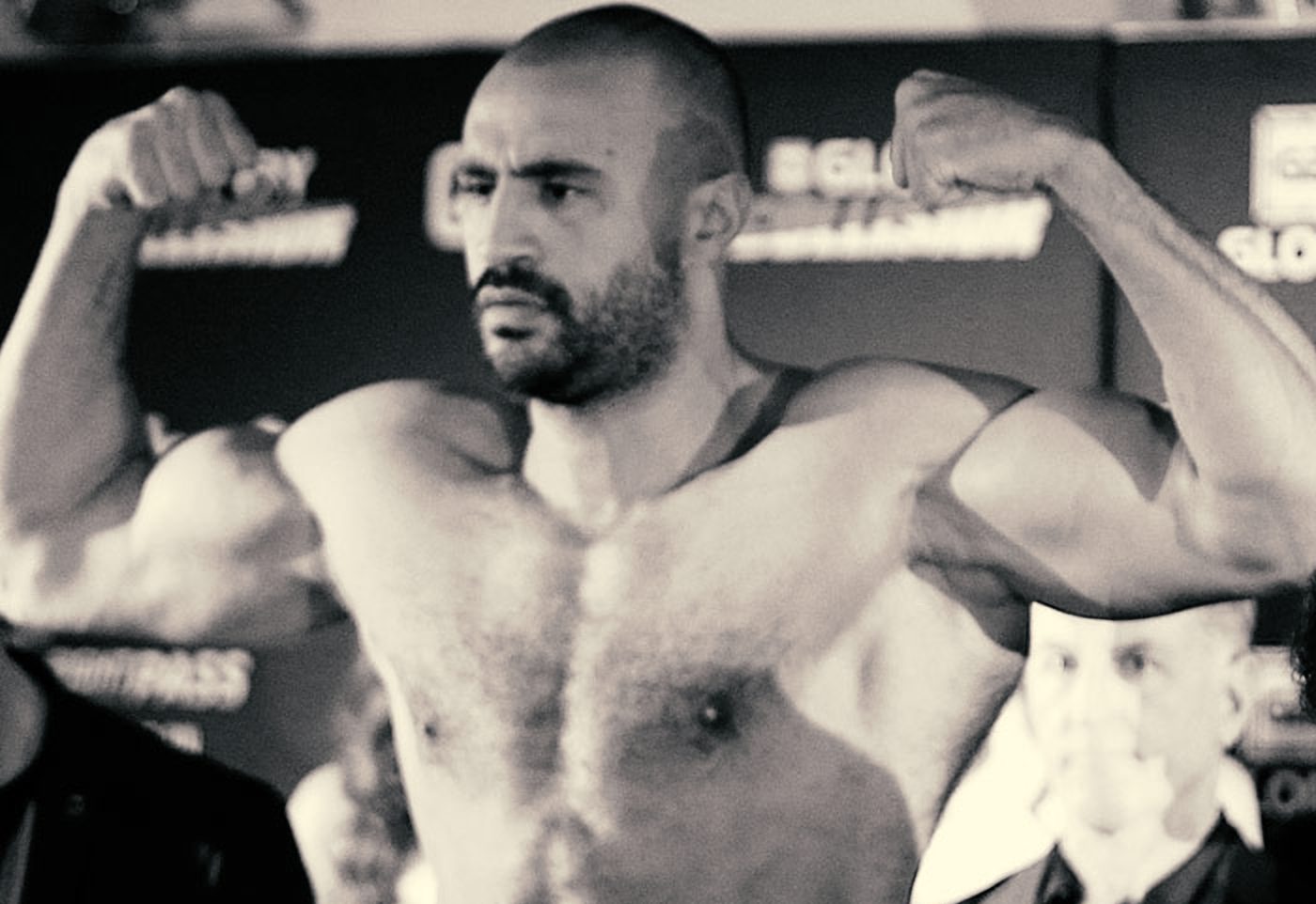
Photo: Paulblank, CC BY-SA 4.0, via Wikimedia Commons