Seventeen UFC submission wins. More finishes than anyone else in the promotion. More post-fight bonuses, too. Charles Oliveira’s career can be measured in records, but the numbers only make full sense once you go back to the beginning, to a skinny kid in coastal São Paulo who was once told sport might not be for him at all.
Charles Oliveira before the UFC
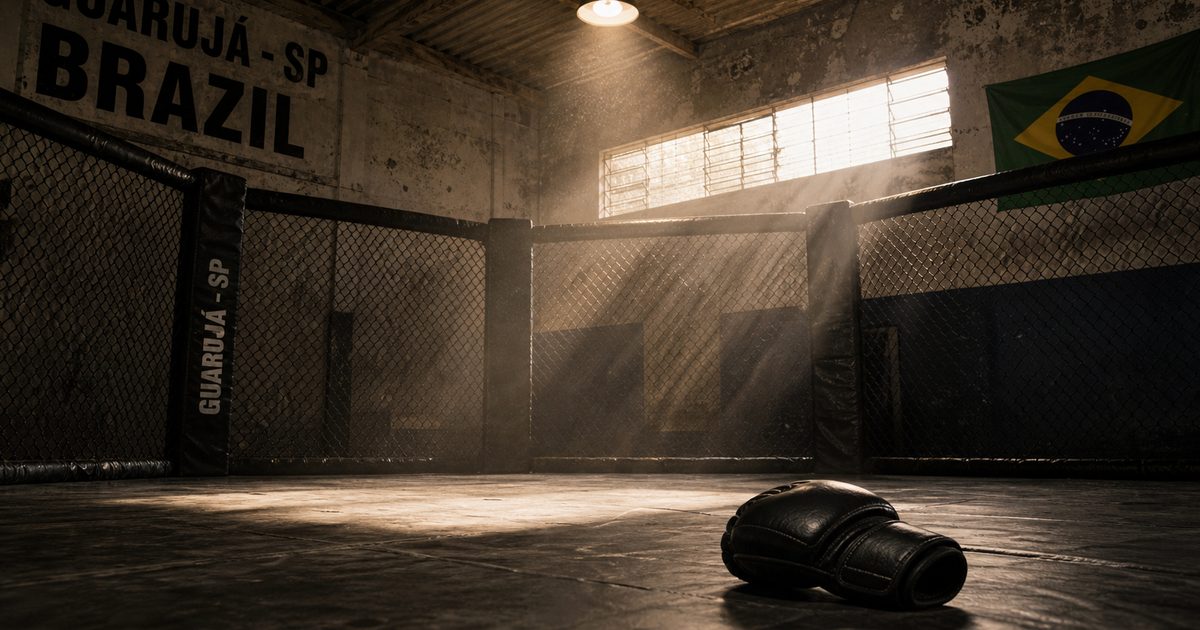
Charles Oliveira da Silva was born on October 17, 1989, in Guarujá, in the state of São Paulo, Brazil. He grew up in a modest neighborhood, and the nickname that later followed him into arenas around the world came from that background. “Do Bronxs” is a Brazilian slang reference to the outskirts and poorer areas he came from, not a claim about New York.
His childhood included a serious health scare. As a boy, Oliveira was diagnosed with a heart murmur and rheumatic fever, and his family has often retold the story that doctors warned against strenuous physical activity. Whether that warning was absolute or cautious, the point remains the same: his path into elite combat sports was anything but straightforward.
Martial arts entered his life through access, not planning. Around age 12, a neighbor brought him to a local gym where classes were free, and Brazilian jiu-jitsu quickly became the center of his life. His family did what it could to keep him training, reportedly helping with costs by selling snacks and collecting cardboard. It was a patchwork system, but it worked.
He showed talent early on the mat. In his teens, Oliveira built a strong jiu-jitsu résumé in São Paulo and beyond, winning regional and national tournaments at colored-belt level. Those results mattered less as standalone trophies than as proof of what he already was: a natural finisher with unusual confidence in scrambles, transitions and submissions. He later earned his black belt under Ericson Cardoso and Jorge “Macaco” Patino.
A fast start in MMA
Before he became a UFC lightweight champion, Charles Oliveira was a young Brazilian prospect taking fights wherever they came. He made his professional MMA debut in 2008 and ran through the early part of his career in Brazil with a string of finishes. By the time the UFC signed him in 2010, he had built a 12-0 record.
That first version of Oliveira was easy to identify. He was long, aggressive and dangerous on the ground from almost any position. If an opponent made a mistake in a scramble, he could turn it into a choke or joint lock in seconds. What was less clear then was how far his game would grow.
He debuted in the UFC in August 2010 against Darren Elkins and won by submission in the first round. It was an ideal introduction: quick, opportunistic and unmistakably his. A few months later he stopped Efrain Escudero with a rear-naked choke. The early message was simple. Oliveira was not in the promotion to outpoint people.
The years that followed were productive but uneven. He fought at featherweight for much of that stretch and mixed impressive wins with frustrating setbacks. There were losses to established names, including Jim Miller, Frankie Edgar, Cub Swanson and Max Holloway, and there were also reminders of how dangerous he remained, such as submission victories over Jonathan Brookins, Eric Wisely and Hatsu Hioki.
Part of the story was physical. The cut to 145 pounds often looked harsh, and his performances could swing with it. In hindsight, the long road matters because it explains why Oliveira’s championship rise felt earned rather than sudden. He had already spent years in the UFC, winning, losing, adjusting and rebuilding.
The move to lightweight changed everything
Some careers turn on one title fight. Oliveira’s turned earlier, with a division change and a steadier version of himself.
Back at lightweight, he looked stronger, more durable and more willing to let his striking work alongside his grappling. The old submission instincts never disappeared, but he no longer fought like a specialist waiting for one phase. He became a layered offensive fighter.
The run that changed his place in the sport began in 2018. He beat Clay Guida, Christos Giagos, Jim Miller in their rematch, David Teymur, Nik Lentz, Jared Gordon, Kevin Lee and Tony Ferguson. Some wins came by submission, some by strikes, and together they showed a more complete athlete than the one fans had first met years earlier.
By then, Oliveira was no longer just a dangerous undercard action fighter. He was a real contender in the UFC lightweight division, carrying momentum and a style that made every exchange feel unstable for the man across from him.
Charles Oliveira’s title win and lightweight reign
The breakthrough came at UFC 262 in May 2021. Oliveira faced Michael Chandler for the vacant UFC lightweight title and survived a difficult first round before turning the fight in the second. He dropped Chandler and finished him by TKO to become champion.
It was one of the defining moments of his career because it captured the full arc. After years of being viewed as talented but vulnerable, he had climbed all the way to the top of one of the UFC’s deepest divisions.
His first title defense came in December 2021 against Dustin Poirier. Again, the fight tested him. Again, he answered. Oliveira submitted Poirier with a rear-naked choke in the third round, a result that reinforced what made him so hard to handle: he could be hurt, he could be chaotic, and he could still drag a fight into his world and finish it.
Then came the strangest turn of his championship run. In May 2022, ahead of UFC 274, Oliveira missed weight for his scheduled defense against Justin Gaethje and was stripped of the title. He went on to defeat Gaethje by first-round submission, but the belt could not be won back in that fight because he had come in over the limit. Officially, his reign ended on the scale, not in the cage.
Later that year, in October 2022, he fought Islam Makhachev for the vacant lightweight championship and lost by second-round arm-triangle choke. It was a clear defeat and a major checkpoint in the division’s story.
Staying near the top
Elite lightweights rarely get easy resets, and Oliveira’s came against another top contender. In June 2023, he stopped Beneil Dariush in the first round, a sharp and violent performance that put him right back in the title conversation.
He followed that with a split-decision loss to Arman Tsarukyan at UFC 300 in April 2024, a close fight that underlined how narrow the margins remained at the top of the weight class. Oliveira was still one of the division’s central figures, but not in a position where anything could be taken for granted.
That is where the verified record becomes especially important. The source text included later fights, a second bout with Michael Chandler, a loss to Ilia Topuria, a win over Mateusz Gamrot and a BMF title victory over Max Holloway. Those results are not established UFC record at the time of writing here and should not be presented as fact without reliable confirmation. For accuracy, they are omitted.
What can be stated cleanly is this: Oliveira’s late-career standing has been built on longevity as much as peak performance. He has remained relevant across multiple eras of the division, from his early years as a submission threat to his championship run and beyond.
Why his style works
At a glance, the label is obvious: Brazilian jiu-jitsu specialist. It is also incomplete.
Oliveira’s ground game is elite by any standard. He attacks the neck, takes the back quickly, and is unusually comfortable threatening submissions during transitions rather than only after settling position. That is a big reason he owns the UFC record for most submission wins.
But the more interesting part of his development is what happened on the feet. Under Chute Boxe Diego Lima, his striking became sharper, straighter and more confident. He learned to pressure, to counter, and to use punches and knees to create the reactions that opened grappling exchanges. He still fights with risk. He can still be hit. Yet that danger runs both ways, and that is why so many of his bouts end before the scorecards.
His official professional MMA record stands at 35 wins, 10 losses and 1 no contest after the Tsarukyan fight. Of those wins, 10 came by knockout, 21 by submission and 4 by decision. The shape of the record tells the story as clearly as any scouting report: Oliveira hunts finishes.
Life outside the cage
For all the violence of his profession, Oliveira’s public image outside it has long been tied to home and community. He has remained closely associated with Guarujá and with the identity behind “Do Bronxs,” presenting himself less as a polished celebrity than as someone who never fully left the environment that formed him.
He is also a father; his daughter Tayla is frequently mentioned in his public life. Claims about his marriage should be handled carefully. There have been social-media-based reports about a split from his wife, Roberta, but unless Oliveira or the family confirms such details directly, that remains reported rather than established fact.
One of the more meaningful parts of his story away from fighting is his community work. Oliveira has been involved in projects that provide jiu-jitsu training and support for local children, a natural extension of his own start in free classes. In his case, that connection does not feel manufactured. Access changed his life, so he has tried to create it for others.
He trains with Chute Boxe Diego Lima, the team most closely linked to his mature form as a fighter. That camp helped refine the balance between his submission game and his stand-up, turning a gifted grappler into a champion-level mixed martial artist.
FAQ
What is Charles Oliveira’s nickname?
“Do Bronxs.” It refers to the poorer neighborhoods and outskirts he came from in Brazil.
Where is Charles Oliveira from?
He was born in Guarujá, São Paulo, Brazil.
Was Charles Oliveira a UFC champion?
Yes. He won the UFC lightweight title in May 2021 by defeating Michael Chandler.
What is Charles Oliveira’s fighting style?
He is a Brazilian jiu-jitsu-based mixed martial artist known for submissions, aggressive transitions and improved Muay Thai-influenced striking.
How many UFC submission wins does Charles Oliveira have?
He holds the UFC record for most submission wins, with 16 through his fight with Arman Tsarukyan.
What is Charles Oliveira’s MMA record?
After UFC 300, his official professional record stood at 35-10 with 1 no contest.